
ChatGPT Subscription Guide in 2026: Official Payment, App Stores, and CZGPT Risks
Paying for ChatGPT can be more difficult than using it. A payment may fail because of service-region eligibility, card issuance country, billing details, bank controls, app-store account rules, or fraud screening.
This 2026 guide compares four routes: official web billing with a supported payment method, an official mobile-app subscription, shared accounts, and a third-party service called CZGPT. The third-party walkthrough is retained from the original article, but its marketing claims are clearly separated from independently verifiable facts.
Check eligibility before payment
OpenAI publishes a current list of supported ChatGPT countries and territories. OpenAI warns that accessing or offering access outside that list may result in an account being blocked or suspended, and that payment methods from unsupported countries can also cause loss of service.
A virtual card, gift card, proxy, or third-party seller does not change where you reside or make an unsupported location eligible. Follow the rules that apply to your location and account.
Third-party disclosure
CZGPT says in its terms that it is an independent third-party payment and account-delivery service with no official relationship to OpenAI. Its prices, delivery times, testimonials, payment channels, inventory, and support promises are CZGPT's claims. This site has not independently verified each claim and does not guarantee the service.
The original submitted article promotes CZGPT. Read this site's affiliate disclosure before using a commercial link.
The safest order of preference
If your location and payment method are supported:
- subscribe on
chatgpt.comwith the payment options shown at checkout; - alternatively, subscribe in the official ChatGPT iOS or Android app through Apple or Google;
- use an approved Business or Enterprise workspace for organizational access; and
- avoid any route that asks another party to control your account or authenticated session.
OpenAI's current multi-currency billing guide says web subscriptions accept credit and debit cards in all supported countries, with additional local methods only in certain markets. Mobile subscriptions are managed by Apple App Store or Google Play. Payment methods and local prices can change, so the live checkout page is authoritative.
Why an official payment may fail
The card is declined
Your credit card was declined does not identify one cause. Possible causes include:
- the issuer declined an international or recurring transaction;
- the card or billing country is unsupported;
- the billing address does not match the issuer's record;
- funds or card limits are insufficient;
- the payment processor requested additional authentication; or
- automated risk controls rejected the transaction.
Do not submit the same charge repeatedly. First check the bank notification, billing details, supported-country rules, and OpenAI status page. Contact the card issuer and OpenAI support through official channels if the cause remains unclear.
Additional authentication fails
Some cards require issuer authentication such as 3D Secure or regional strong-customer authentication. A blocked issuer page, an expired challenge, or an incomplete bank confirmation can prevent the subscription from starting.
Only approve a challenge you initiated on chatgpt.com or in the official app. Never read a verification code to a seller.
The mobile subscription is attached to another account
An iOS or Android subscription is linked both to the app-store account and to the ChatGPT account signed in at purchase. It cannot simply be transferred to another ChatGPT account. Before confirming an in-app purchase, verify the ChatGPT email and sign-in method currently displayed.
A general error appears
Something went wrong can represent a temporary service, browser, payment, or risk-control error. Save the error and timestamp, stop repeated attempts, and check whether a pending charge or active plan already exists.
Four purchase routes compared
1. Official web subscription
How it works: sign in at chatgpt.com, open the plan or billing page, and pay with a method offered to your account.
Advantages:
- OpenAI is the merchant and support source;
- plan status and cancellation are managed in ChatGPT;
- no intermediary needs account access; and
- the live checkout displays the applicable price, currency, and tax.
Limitations:
- the service and payment method must be supported;
- card authentication or issuer restrictions can still fail; and
- ChatGPT subscription fees do not include separate OpenAI API usage.
This is the recommended route whenever it is available legitimately.
2. Official iOS or Android subscription
How it works: subscribe in the official ChatGPT app and pay through the Apple App Store or Google Play account already connected to the device.
Advantages:
- the app store manages the transaction and local payment options;
- billing appears in the store's currency; and
- cancellation and refund requests have a defined store process.
Limitations:
- the purchase becomes associated with the ChatGPT account signed in at that moment;
- one mobile subscription cannot be shared across several ChatGPT accounts;
- it must be cancelled through the store; and
- a gift card must match the store region and come from a legitimate source.
Do not change the region of a primary Apple or Google account casually. Existing balances, subscriptions, family groups, and content availability may be affected. Never buy a suspiciously discounted or already-revealed gift-card code.
3. Virtual or prepaid cards
How it works: a separate provider issues a Visa, Mastercard, or other supported payment instrument that the user tries at official checkout.
The risks are broader than the card fee:
- identity verification and sensitive documents may go to the card provider;
- funding may require crypto or another irreversible payment;
- opening, monthly, foreign-exchange, and failed-charge fees can accumulate;
- the issuer, card range, or balance can become unavailable; and
- a supported card does not override OpenAI's country rules.
This can be reasonable for an eligible user who already has a compliant international-payment setup. It is not a reliable workaround for an unsupported location.
4. Shared accounts and third-party delivery
A shared ChatGPT account should be avoided. OpenAI's account-sharing policy states that an account is for the individual who created it. Sharing credentials can expose conversations, files, personal data, and payment information, and another user can trigger misuse or account restrictions.
Third-party sellers use several different delivery models:
- a gift card or redemption code;
- a seller-created account;
- a purported upgrade of the buyer's existing account;
- a payment performed after the buyer provides a session, cookie, or token; or
- a recurring seller-managed renewal.
These are not equivalent. A seller-created account may never be fully controlled by the buyer. A session cookie or token can authorize access without the password and should be treated as a login credential.
Comparison table
| Route | Account control | Credential exposure | Billing support | Main risk | Recommendation |
|---|---|---|---|---|---|
| Official web checkout | User | None beyond OpenAI checkout | OpenAI and card issuer | Eligibility or card failure | Preferred |
| Official mobile purchase | User | None beyond OpenAI and app store | Apple or Google | Wrong ChatGPT account or store region | Good official alternative |
| Virtual or prepaid card | User | Identity and funding data go to card issuer | Multiple providers | Card-provider failure and compliance | Only for experienced, eligible users |
| Shared account | Seller or several strangers | Full account content | Usually seller-only | Privacy, misuse, loss of access | Do not use |
| CZGPT or another third party | Depends on product | May include session or account data | Seller terms | Upstream source, credentials, refund limits | High-risk; inspect before purchase |
Codex, ChatGPT plans, and API billing
Do not purchase a product merely because a seller labels it "Codex."
OpenAI's current Codex pricing documentation lists Codex access with eligible ChatGPT plans, including Plus and Pro, and explains that plan usage varies with model and task complexity. It also lists API-key use separately as usage-based billing.
Keep these categories distinct:
- ChatGPT plan: includes the ChatGPT features and Codex allowance specified for that plan.
- ChatGPT credits or additional usage: may extend eligible plan usage under current rules.
- OpenAI API: billed separately according to API usage and is not funded by a ChatGPT Plus or Pro subscription.
- Seller-defined "Codex product": may mean a plan upgrade, credits, an account, or something else entirely.
Before buying from any seller, require the exact official plan name, duration, account owner, renewal model, and whether extra OpenAI or seller charges can occur.
CZGPT walkthrough
The following steps translate the submitted CZGPT workflow. They show what the platform presented in July 2026; they are not proof that the same product, price, payment channel, or delivery mechanism is available now.
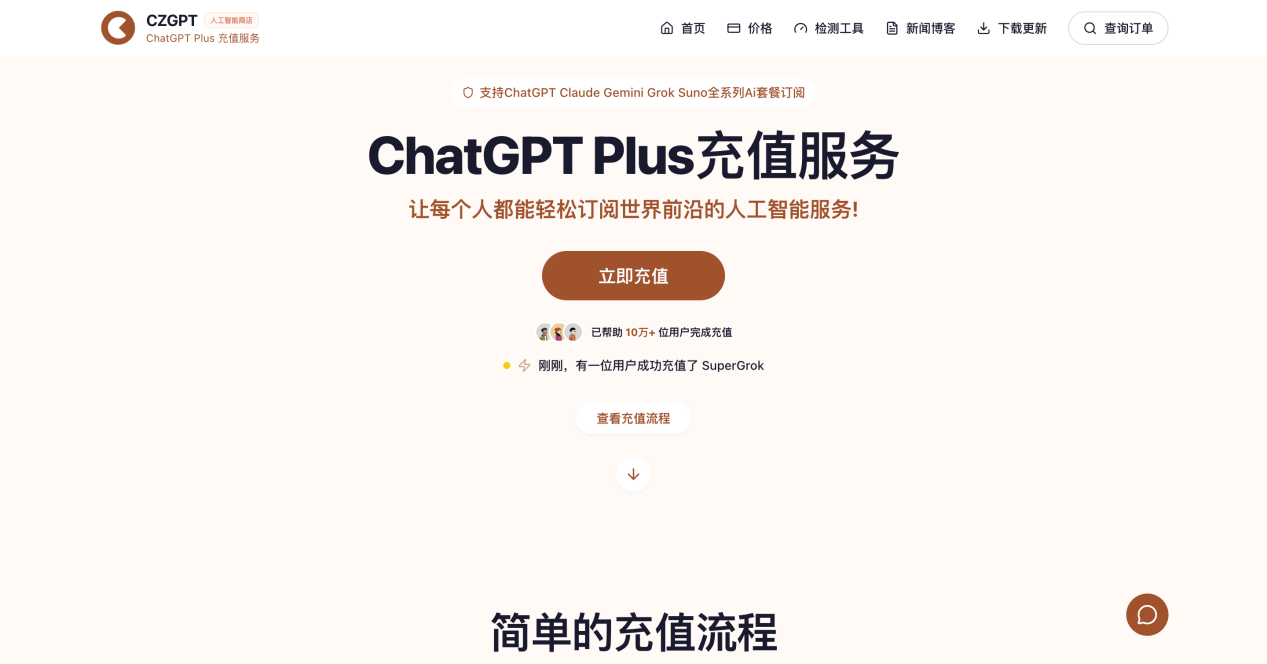
Step 1: select a product
Open CZGPT and inspect the product catalog.
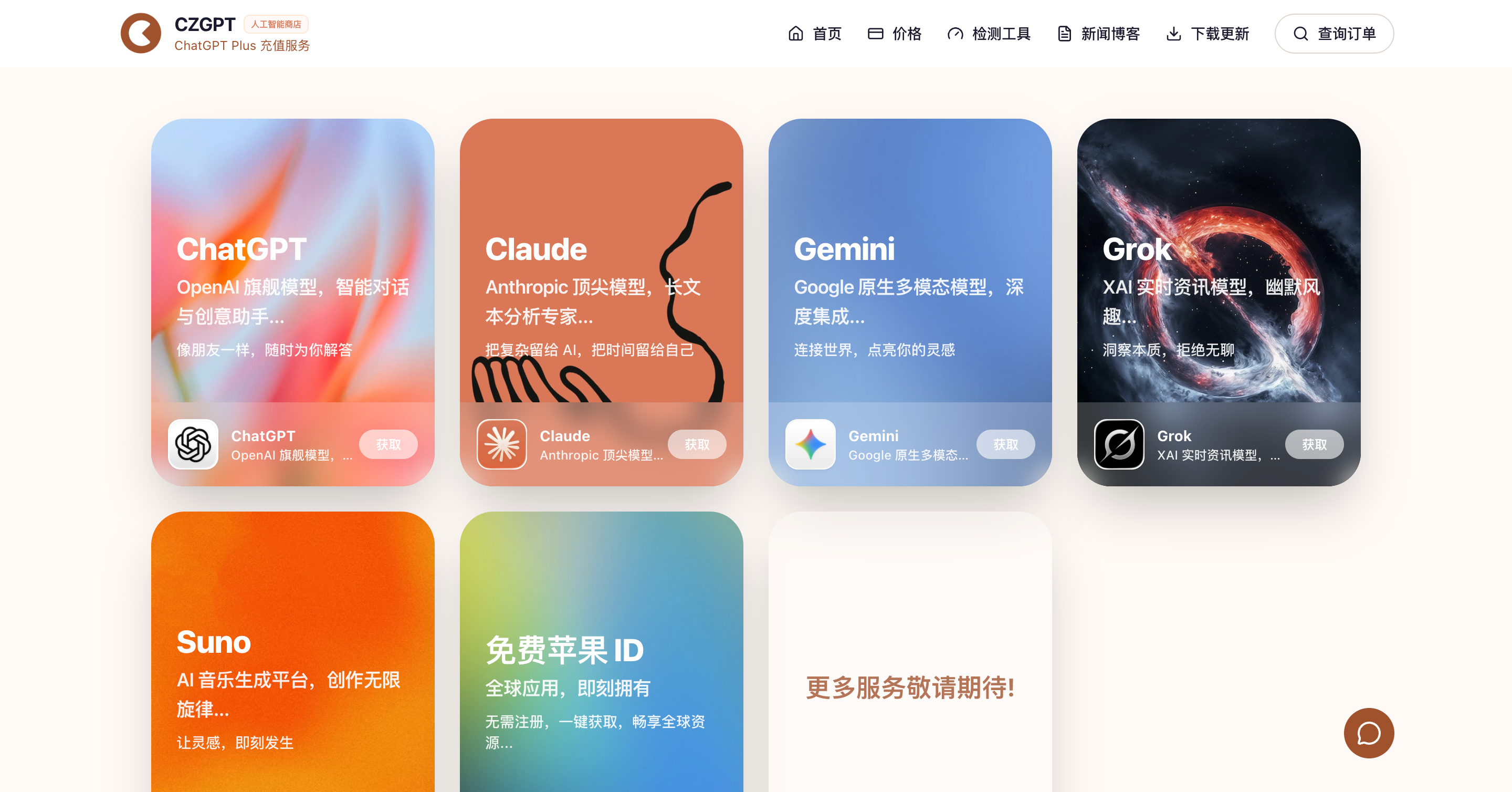
The submitted screenshots show categories for ChatGPT, Claude, Gemini, Grok, Suno, and other AI products.
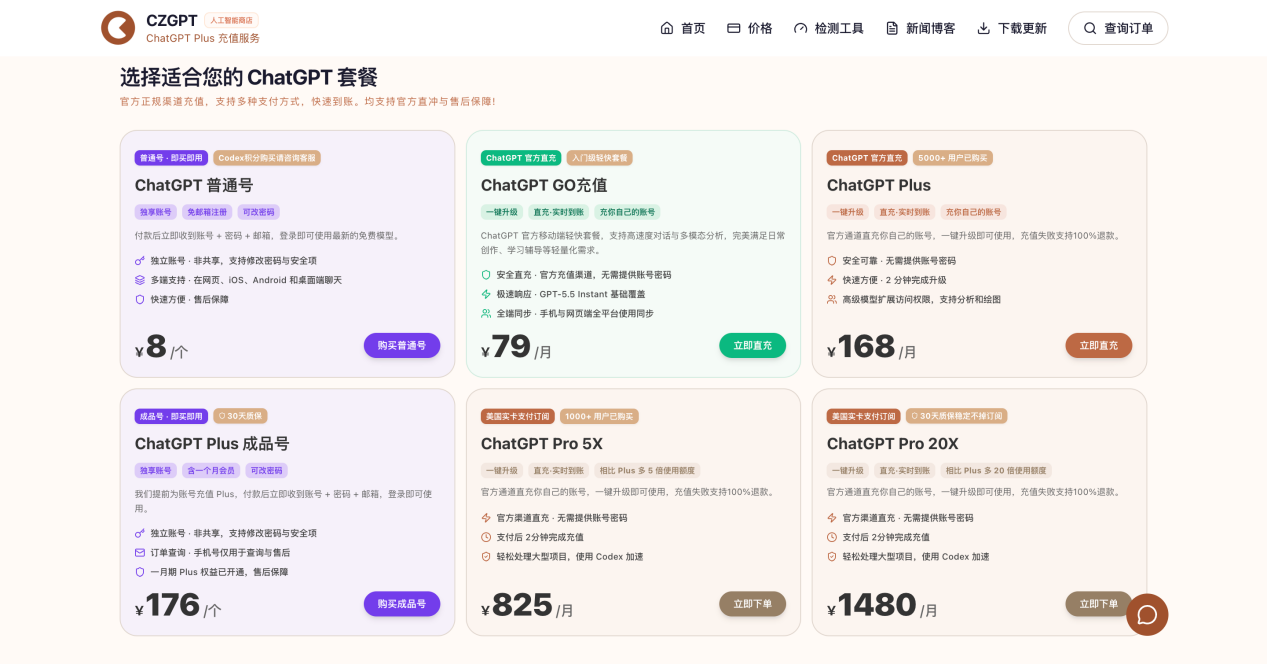
Before paying, obtain written answers to all of these questions:
- Is the product an upgrade to an account you created, a code, a gift card, credits, or a completed account?
- Will you be asked for a password, verification code, recovery code, session, cookie, token, or browser extension?
- Is delivery one-time, or does the seller manage later renewals?
- Does the official plan remain visible in ChatGPT billing settings?
- Who receives renewal notices and controls cancellation?
- What happens if OpenAI reverses the payment or limits the account later?
- Which facts are covered by a refund, replacement, or no-refund rule?
Third-party site, not affiliated with OpenAI. Confirm the product, account-control model, credential request, current price, and refund terms before paying.
Step 2: enter order details and pay
The source workflow asks for contact information used to retrieve the CZGPT order and receive support.
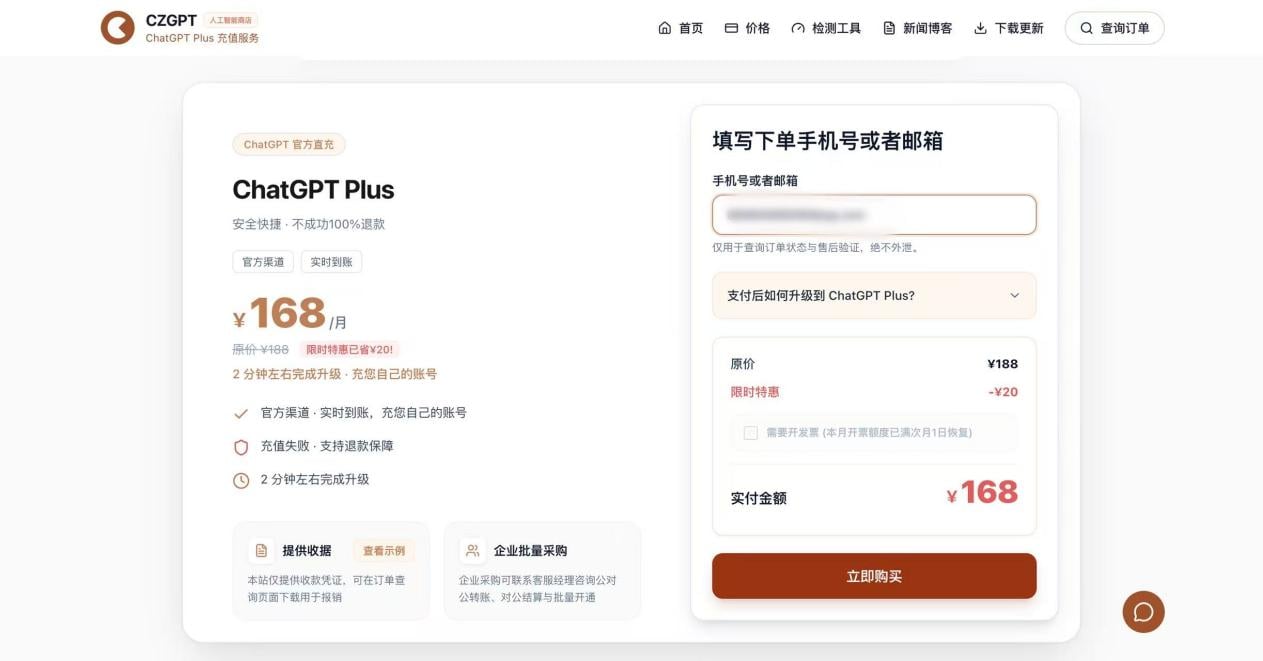
Do not enter a ChatGPT password, email verification code, authenticator code, recovery code, API key, or session token in a contact-information field.
The submitted checkout screenshot shows a QR-code payment flow.
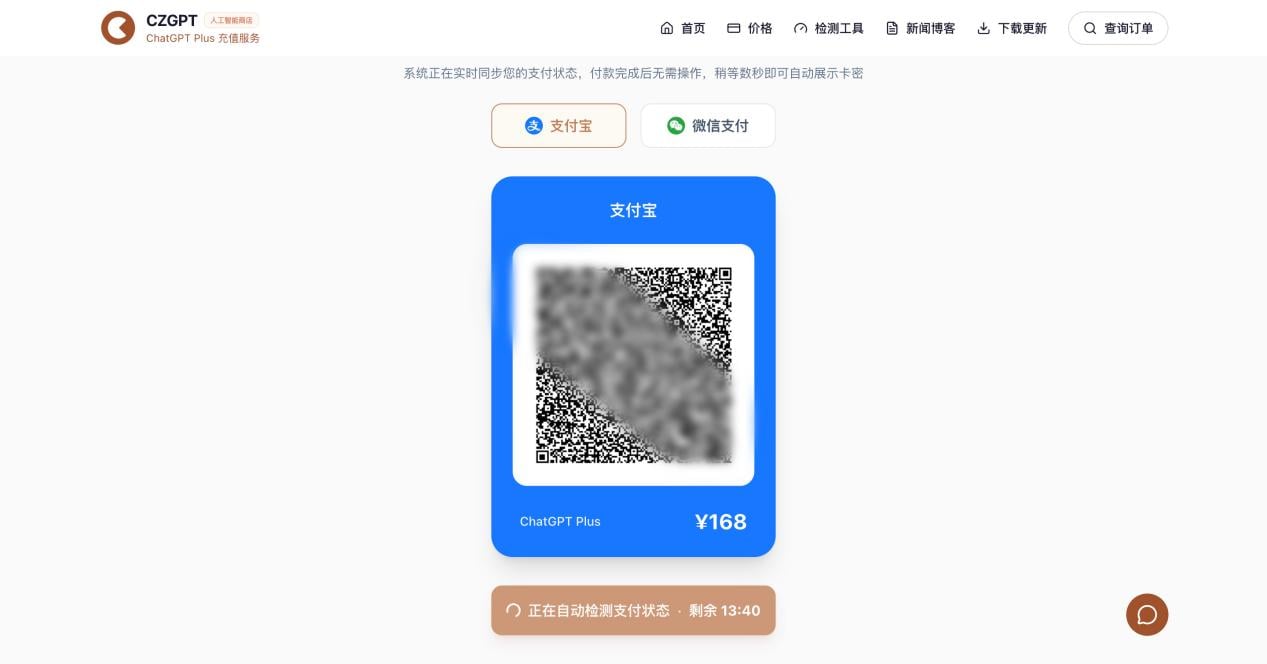
CZGPT's public pages claim support for familiar local payment channels, but availability must be verified at checkout. Save:
- the product description;
- the amount and payment recipient;
- the order number;
- the refund and delivery terms visible before payment; and
- a receipt that does not expose secret account data.
Payment traceability does not prove that the upstream subscription source is authorized or durable.
Step 3: retrieve the code or upgrade link
The submitted flow displays a code or upgrade link after payment.
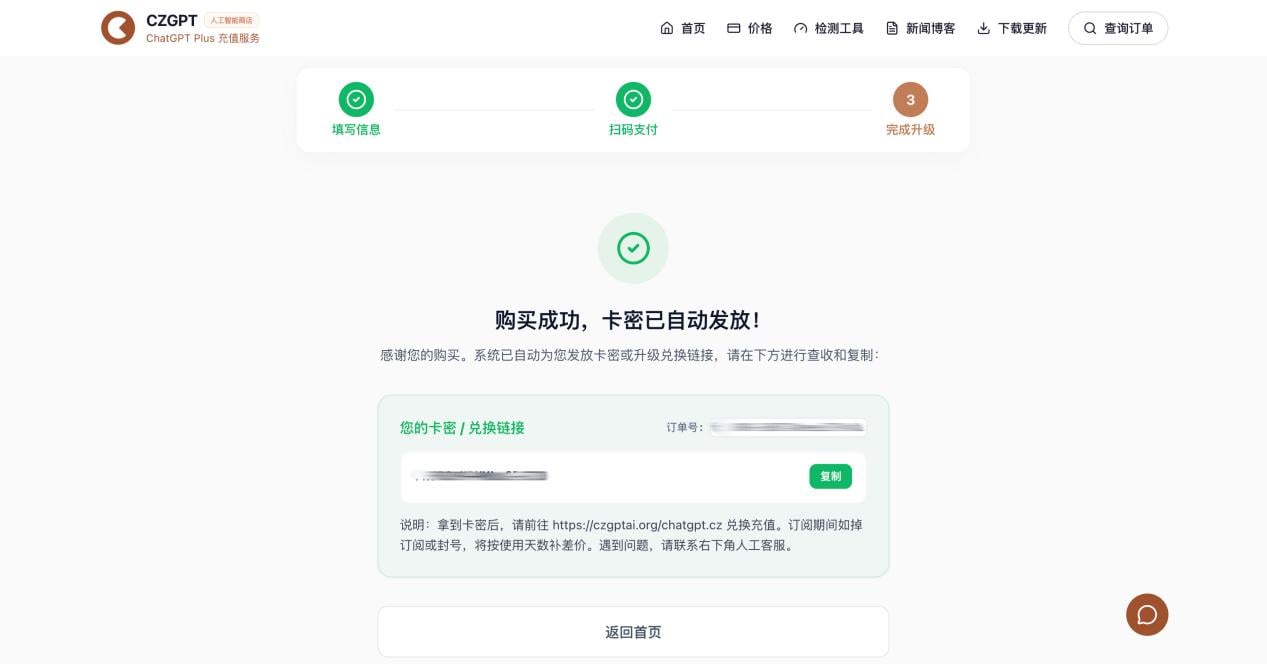
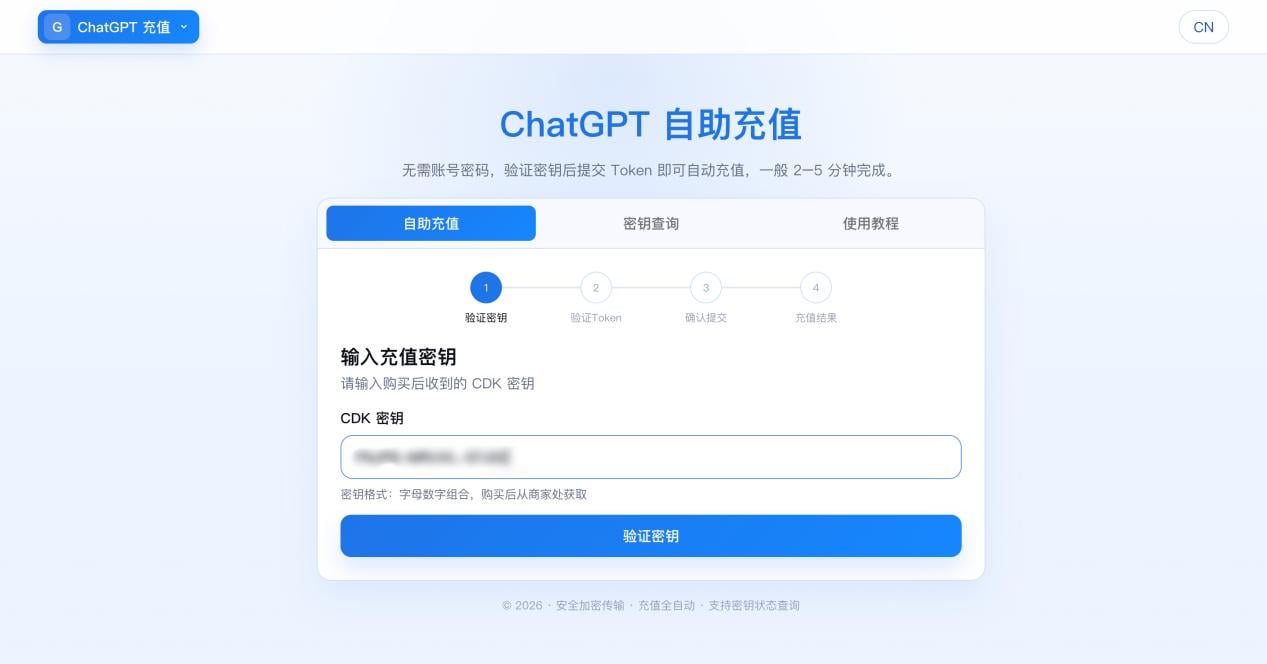
The next screen asks the buyer to confirm the target account.
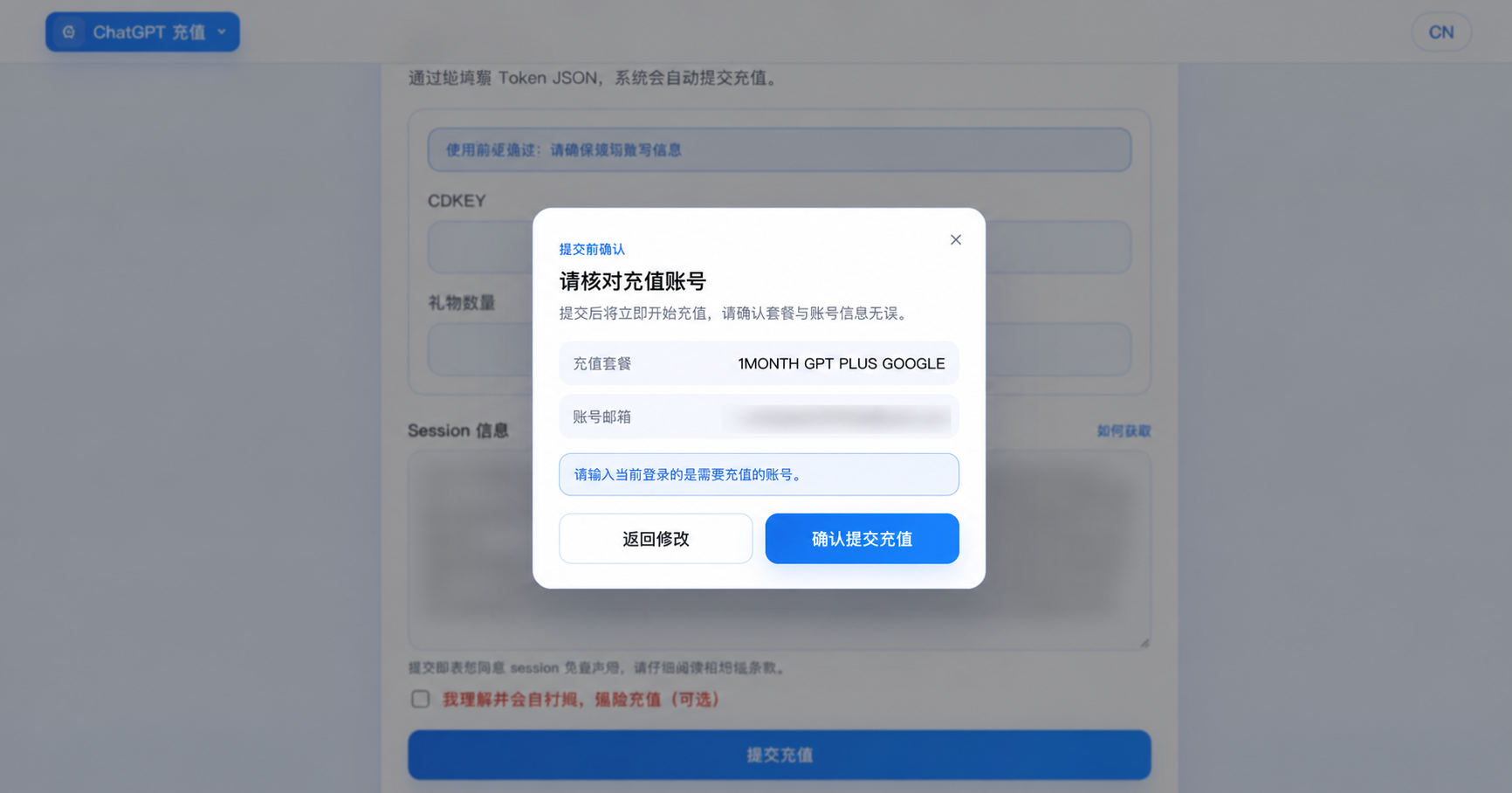
Stop before submitting an authenticated session
Session tokens, cookies, and similar browser data can allow someone to act as you without knowing your password. "We do not need your password" is not a sufficient security guarantee.
CZGPT's published privacy policy describes collection of order details, contact information, IP address, and browser information, but the public text reviewed for this article does not explain a retention and deletion process for OpenAI session credentials. If a product requests them, stop unless you fully understand the method, receive an adequate written privacy explanation, and accept the account risk.
Never install an unknown browser extension or paste code into developer tools to complete a subscription. Those methods can expose every account accessible in the browser.
Step 4: verify delivery in ChatGPT
The submitted result page appears after the seller workflow completes.
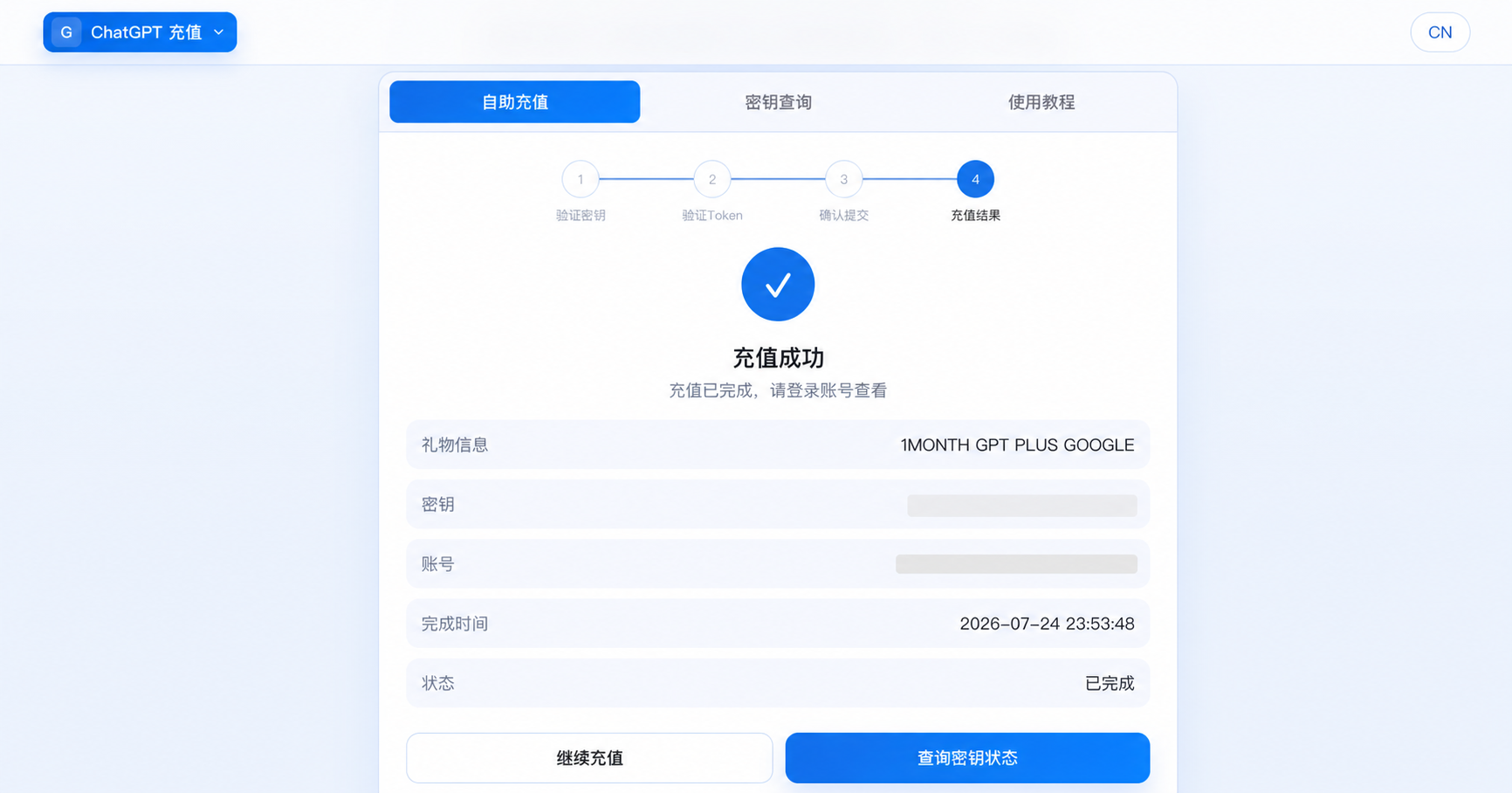
Return to chatgpt.com yourself and inspect the plan or billing page.
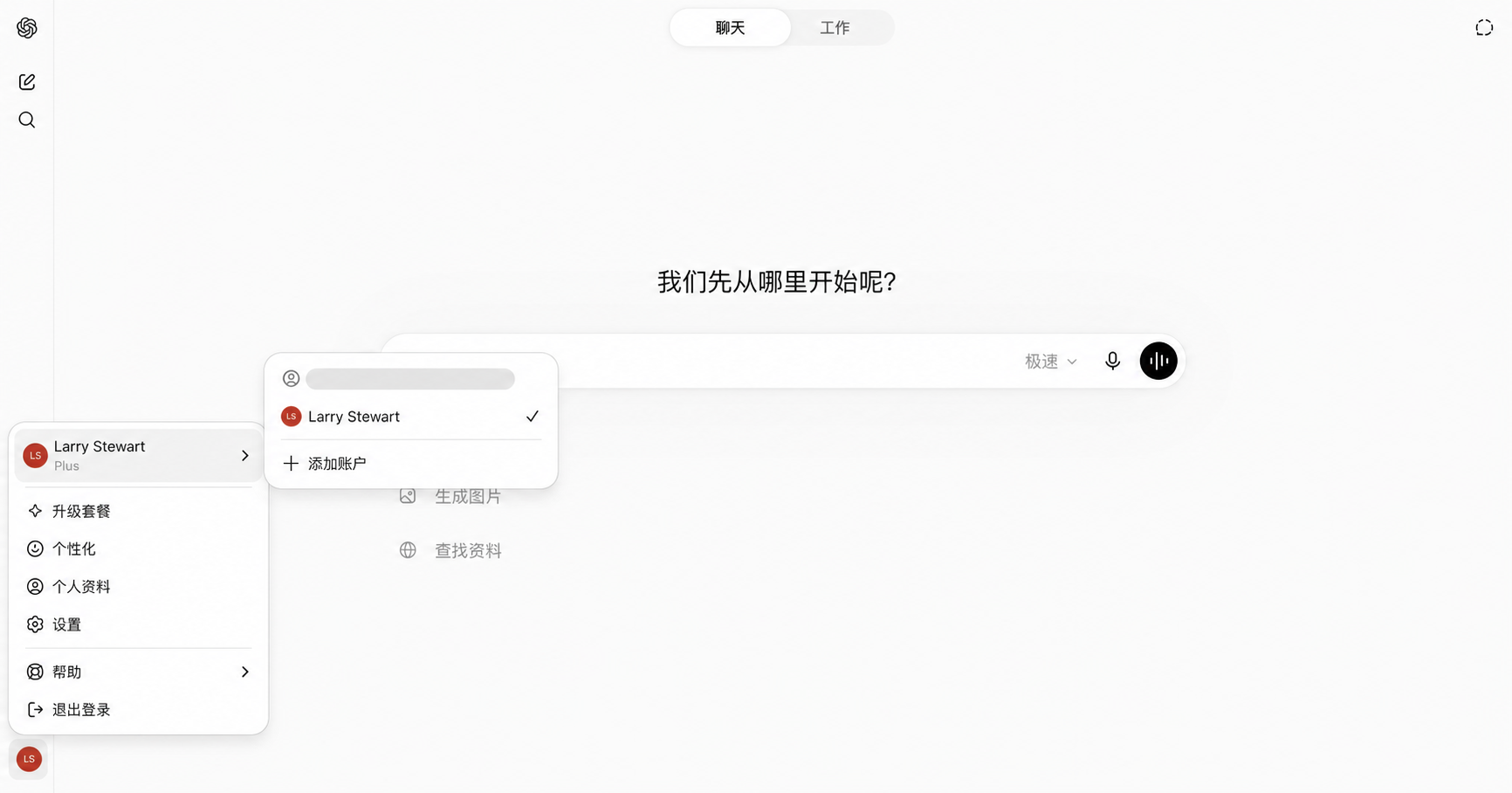
Confirm:
- the intended ChatGPT account is active;
- the exact official plan name is shown;
- the billing source and renewal date are understandable;
- no unfamiliar device or session appears under Settings → Security → Active sessions; and
- no password, sign-in method, recovery option, or connected application changed.
If you exposed a session or suspect unauthorized access:
- log out all active sessions in ChatGPT security settings;
- change the password if the account uses one;
- enable two-factor authentication or a passkey where available;
- review connected applications and sign-in methods;
- revoke exposed API keys separately; and
- contact official OpenAI support for unexplained account activity.
OpenAI notes that logging out all sessions may take up to 30 minutes and that Codex CLI sessions or third-party sessions may not all appear in the same active-session list.
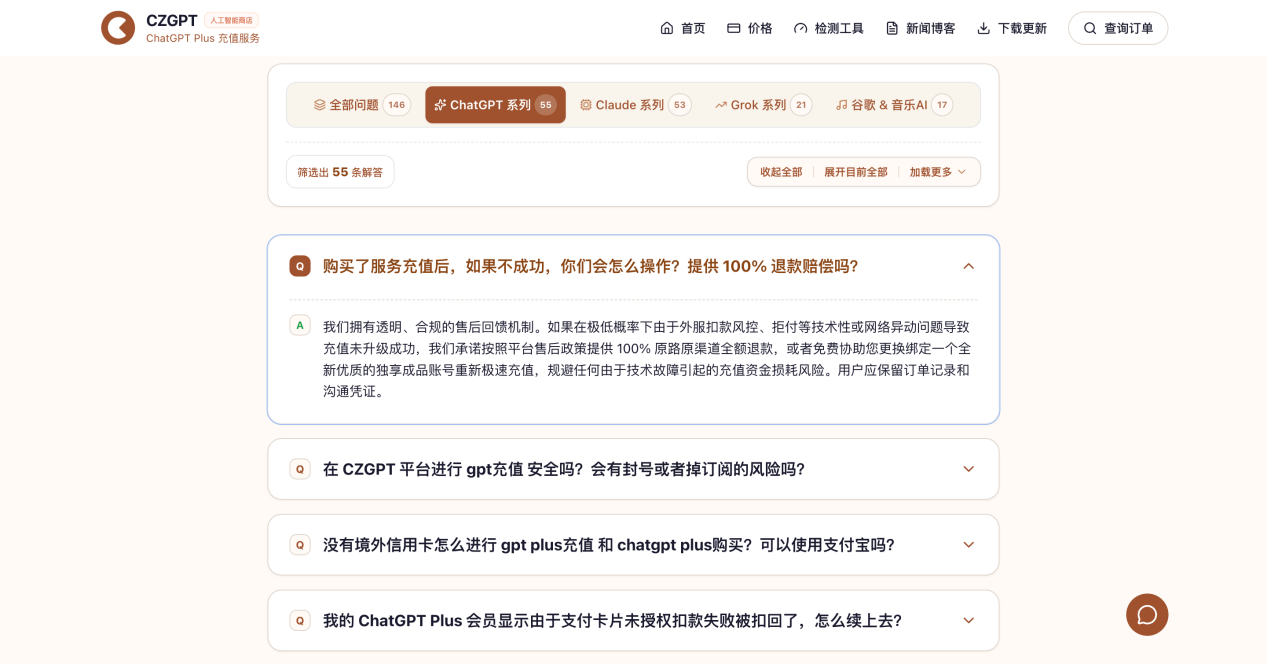
What CZGPT's published terms actually say
The current public CZGPT terms reviewed for this translation say:
- CZGPT is not officially affiliated with OpenAI or other model providers;
- it offers payment assistance and account delivery;
- delivered virtual goods, including codes and accounts, generally cannot be returned without cause;
- a code or account verified as invalid before first use may be refunded or replaced after review;
- buyers should activate or verify a product within 24 hours; and
- CZGPT disclaims compensation for disruption or account restrictions caused by upstream provider policy.
Those are the seller's terms, not an independent guarantee. Save a dated copy before purchase because terms can change.
CZGPT's public privacy policy says it collects order, contact, IP, and browser data and uses third-party payment channels. It does not by itself establish how every product-specific credential flow works.
How to assess any third-party seller
1. Identify the actual product
Reject vague labels such as "permanent Plus," "official internal channel," or "Codex recharge" unless the seller defines the official plan, account owner, duration, renewal, and billing source.
2. Reject credential requests
Never provide:
- your password;
- a one-time verification or authenticator code;
- a recovery code;
- an API key;
- an email-access code;
- an active session token or cookie; or
- a remote-control session to your device.
An ordinary gift code should not require a seller to take over your signed-in browser.
3. Preserve the pre-payment contract
An order number and payment receipt are helpful, but the critical evidence is the product description and refund policy shown before payment. Save them together.
4. Treat extreme discounts as a warning
A price far below the official plan and normal payment costs can reflect a stolen card, compromised account, regional abuse, reversible payment, or misleading product. If the charge is reversed, the subscription or account can disappear after the seller has already been paid.
5. Verify business identity and data handling
Check:
- the legal entity and contact address;
- the domain's history and ownership information where available;
- written terms and privacy policy;
- the actual payment recipient;
- a stable support and dispute process; and
- what data is retained, for how long, and by which subcontractors.
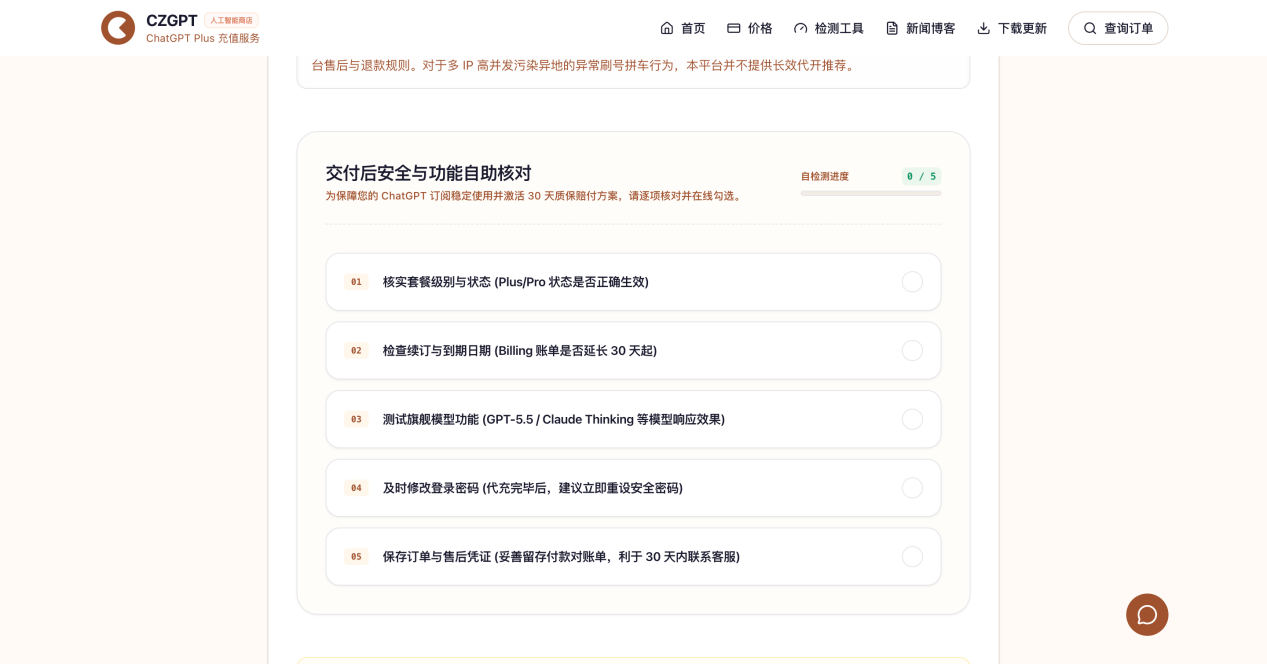
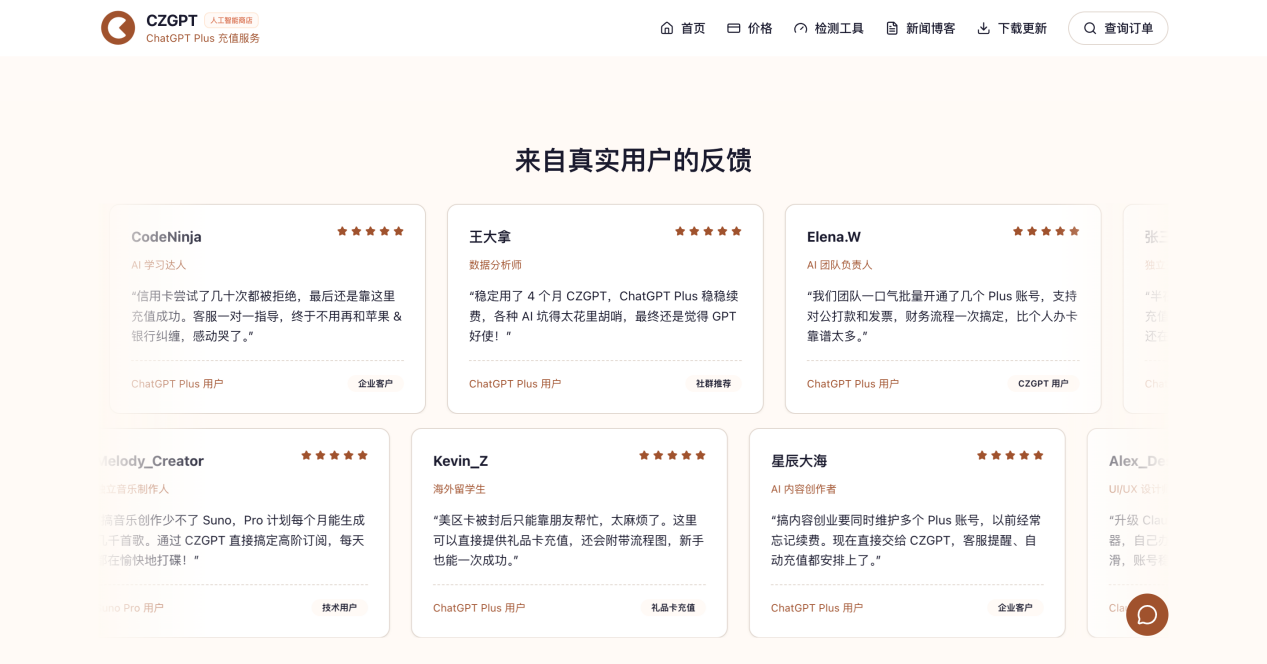
A polished website or a long list of testimonials is marketing evidence, not proof of authorization, solvency, or security.
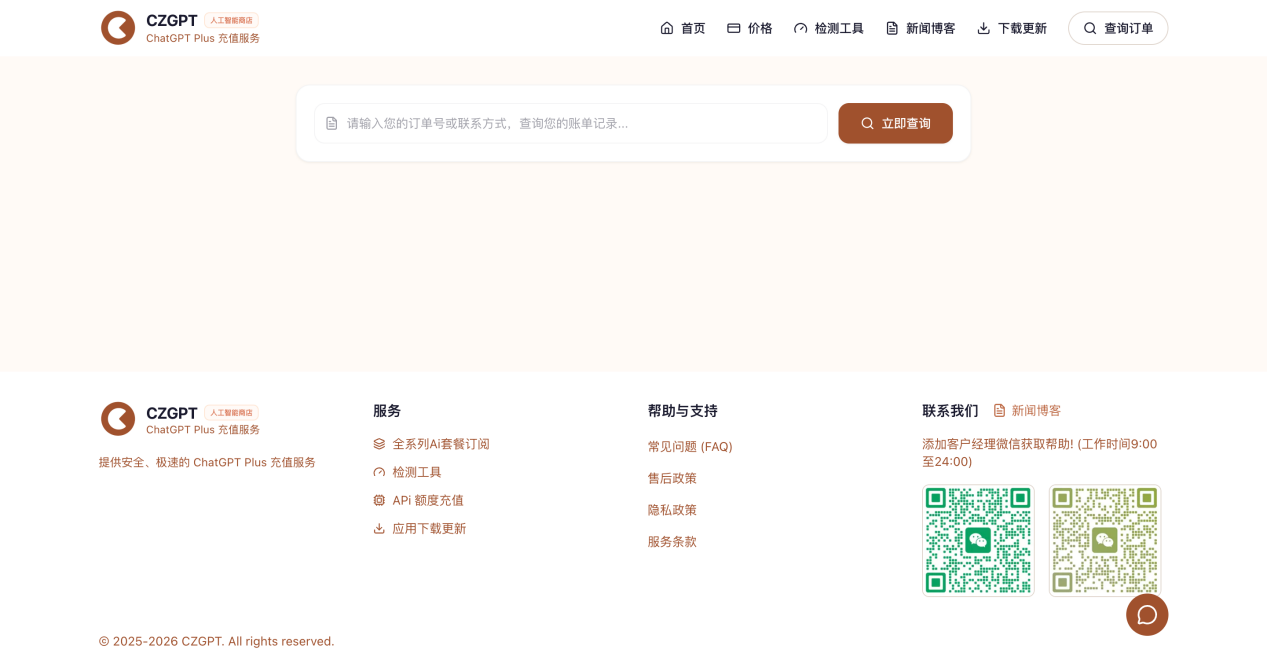
The screenshots below reproduce testimonials and contact information displayed on the submitted platform page. This site has not verified the identities or experiences described.
Subscription management
Know who bills you
- A web subscription is managed in ChatGPT billing settings.
- An iOS subscription is managed by Apple.
- An Android subscription is managed by Google Play.
- A seller-delivered product may have a separate seller order that does not control official billing.
Do not assume that uninstalling the app cancels a subscription.
Cancel through the original channel
OpenAI's cancellation guide currently says web subscribers can cancel under Settings → Billing, while mobile subscribers must cancel through iOS or Android. To avoid the next charge, follow the current notice period shown by the billing provider.
Do not assume an unofficial long-term plan is prepaid with OpenAI
If OpenAI's live pricing page offers only monthly billing for a personal plan, a seller's quarterly or annual product may be a promise to perform future renewals rather than one official prepaid subscription. That creates seller and upstream-policy risk for the undelivered months.
Keep a subscription record
For each AI service, record:
- official account email and sign-in method;
- official plan name;
- merchant and billing channel;
- payment date, renewal date, and order number;
- cancellation and refund route;
- any seller-delivery obligation; and
- whether any credential or session data was disclosed.
Do not put passwords, tokens, recovery codes, or full card numbers in that record.
Frequently asked questions
Can a locally issued card pay for ChatGPT?
It depends on OpenAI's supported-country rules, the card and billing country, issuer policy, authentication, and risk controls. The live checkout options and issuer response are more reliable than a blanket claim about all cards from one country.
Does a third-party upgrade guarantee that the account will not be restricted?
No. A seller cannot guarantee OpenAI's future security, eligibility, payment-reversal, or policy decisions. An order system and published terms may improve evidence for a seller dispute but do not remove the underlying account risk.
Is a shared Plus account acceptable for temporary use?
No. It exposes conversations and files, conflicts with the individual account model, and lets strangers affect the account. Do not enter even "non-sensitive" material: metadata and seemingly harmless context can still identify a person or organization.
Is Codex a separate fixed-price subscription?
Not necessarily. OpenAI currently includes Codex usage with eligible ChatGPT plans and also supports separate usage-based API-key access. A third-party "Codex" label is insufficient; confirm whether it means a ChatGPT plan, ChatGPT credits, API credit, or a seller-managed account.
What if a payment completed but the plan is missing?
Do not pay again immediately.
- verify the ChatGPT account and sign-in method;
- check the official plan and billing page;
- on mobile, sign in to the account originally linked to the app-store purchase and use the supported restore process;
- save the charge and order evidence; and
- contact the support team responsible for the actual billing channel.
Can a subscription be moved to another ChatGPT account?
Do not assume so. OpenAI states that mobile subscriptions are tied to the original ChatGPT and app-store accounts and cannot be transferred. For any other plan, check current official support rather than buying for the wrong account.
Can I get a refund?
It depends on the billing channel, jurisdiction, timing, and product state. OpenAI, Apple, Google, and a third-party seller have separate rules. CZGPT's published terms generally exclude no-cause refunds after delivery and describe an exception for a product verified as invalid before first use.
Does ChatGPT Plus include API credit?
No. ChatGPT plans and the OpenAI API have separate billing. A paid ChatGPT plan does not fund API requests.
Can a seller safely use my session without my password?
No third party can make that categorically safe. A session credential can be sufficient to access the account. Treat the request as account access, not as a password-free payment trick.
Final recommendation
- Use official ChatGPT web or mobile billing when your location and payment method are supported.
- Verify the ChatGPT account before an app-store purchase.
- Keep ChatGPT plan billing separate from OpenAI API billing.
- Do not buy or use shared accounts.
- Do not provide passwords, verification codes, recovery codes, API keys, cookies, sessions, or tokens to a seller.
- If considering CZGPT, recognize that it is an independent third party, preserve the pre-payment terms, and understand that its public refund and privacy pages do not remove upstream or credential risk.
Convenience is not worth losing the account that contains your conversations, projects, files, and development history. If a purchase route cannot explain exactly what it delivers without taking control of your account, stop.
Check current plans, regional prices, and features directly from OpenAI before buying.
Compare current Codex access through ChatGPT plans with separately billed API-key usage.
Independent seller, not affiliated with OpenAI. Review the delivery method, requested credentials, terms, and refund limits before paying.