
April 2026 Proxy-Service Outages—Disconnections, Route Removal, and Price Risk
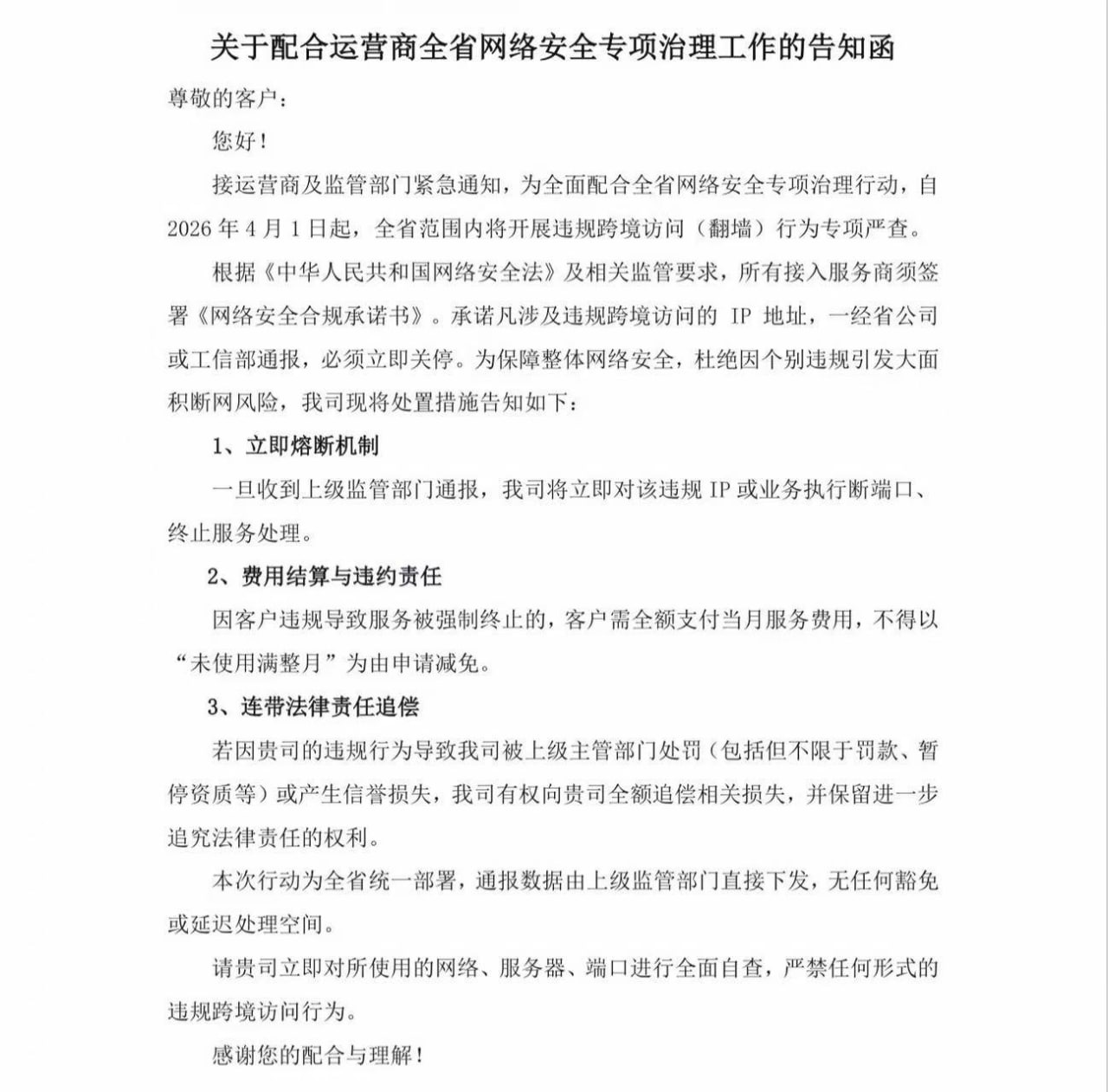
In April 2026, many proxy-service users reported more disconnections, worse evening congestion, slower repairs, reduced multi-carrier ingress, and temporary outages.
The evidence collected for this article suggests pressure across several parts of the supply chain rather than one isolated provider failure: ingress resources were less stable, usable capacity was scarcer, and costs were rising.
- Instability was expected to continue through parts of April and May.
- Providers appeared likely to raise prices, fall back to direct routes, or require proprietary protocols and clients.
- Low-cost, high-quality plans were becoming harder to sustain.
- Large, long-term prepayments carried greater risk.
- A practical user strategy was two independent providers, monthly billing, and a direct-route fallback.
These were April 8 assessments based on notices and industry feedback, not a guarantee of what every provider or route would do.
Short conclusion
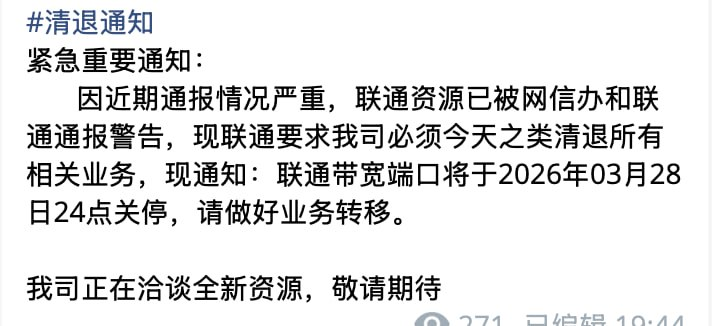
The month's recurring pattern was a notice followed by route removal. The evidence suggested a worse disruption than in March. Users needed to prioritize continued access and fast failover before maximum benchmark speed.
What happened
Public notices, user-group reports, and operator feedback described:
- more disconnects, lower throughput, and jitter across many providers;
- multi-carrier return paths reduced to a single ingress in some deployments;
- direct routes activated as fallbacks, often with weaker evening performance;
- a small number of suspensions or suspected operator exits;
- longer repair times and more refund disputes.
Several operators described the same constraint: usable resources were difficult to obtain, costs were rising, and stable resource windows were getting shorter.
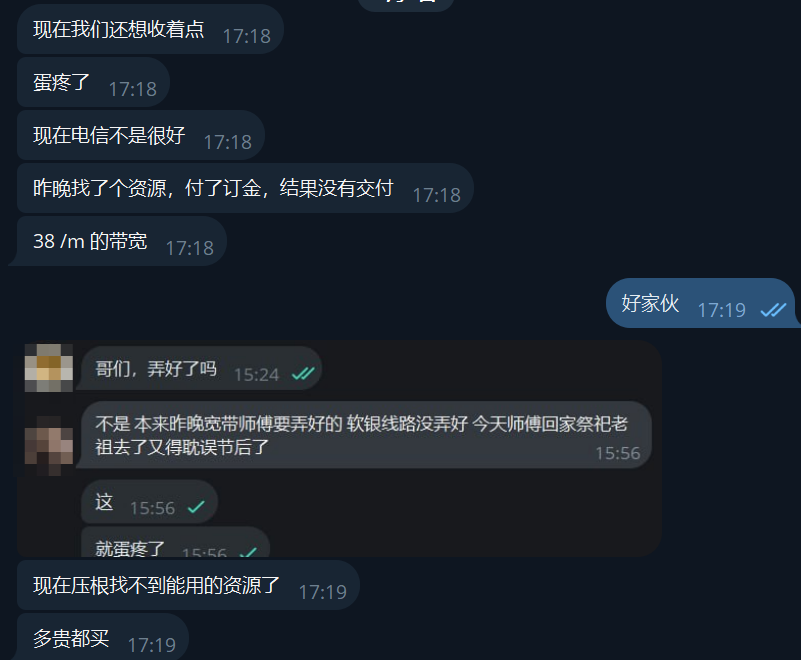
The practical problems included:
- a newly acquired resource could be reported or removed quickly;
- recovery time after removal was unpredictable;
- some upstream suppliers reportedly did not refund after a notice;
- operators had to balance user experience against survival costs.
The screenshots preserve contemporaneous evidence, but individual notices do not prove the scale or cause of every outage.
Why relay providers were affected
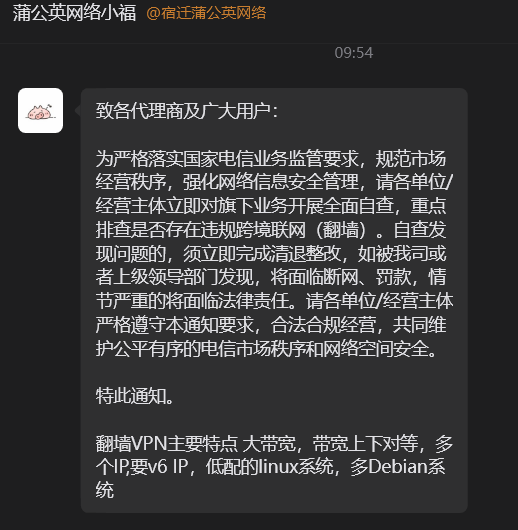
A relay architecture typically sends a user first to a mainland or regional ingress and then forwards traffic to an overseas egress. It can offer good performance, but many nodes may depend on the same ingress.
If that shared ingress is reported or removed, a whole group of nodes can fail together. It is similar to a building with one main electrical switch: central management is convenient, but a failure at the switch affects every floor.
April outlook
The most pessimistic market view expected relay and private-line resources to keep contracting through April and May, with remaining resources becoming more expensive and retail prices rising.
That extreme scenario was uncertain, but several trends were already visible:
- fewer low-cost, high-quality offers;
- higher prices and slower replacement of stable resources;
- more frequent provider switching;
- monthly billing becoming the default risk-control choice for many users.
How providers might respond after May
Some operators might not survive the disruption. Those that did were likely to use one or more of three approaches:
- Raise prices: pass higher resource costs into plan prices.
- Use direct routes: remove the vulnerable relay ingress, accepting generally higher latency or worse peak-hour performance.
- Use proprietary protocols: move to a dedicated client and a provider-controlled protocol that may not import directly into Clash or Shadowrocket.
This means a new user should check more than price and advertised speed:
- Is a proprietary client mandatory?
- Are independent backup routes available?
- Does the operator publish timely status and incident updates?
Reports of Guangdong remediation
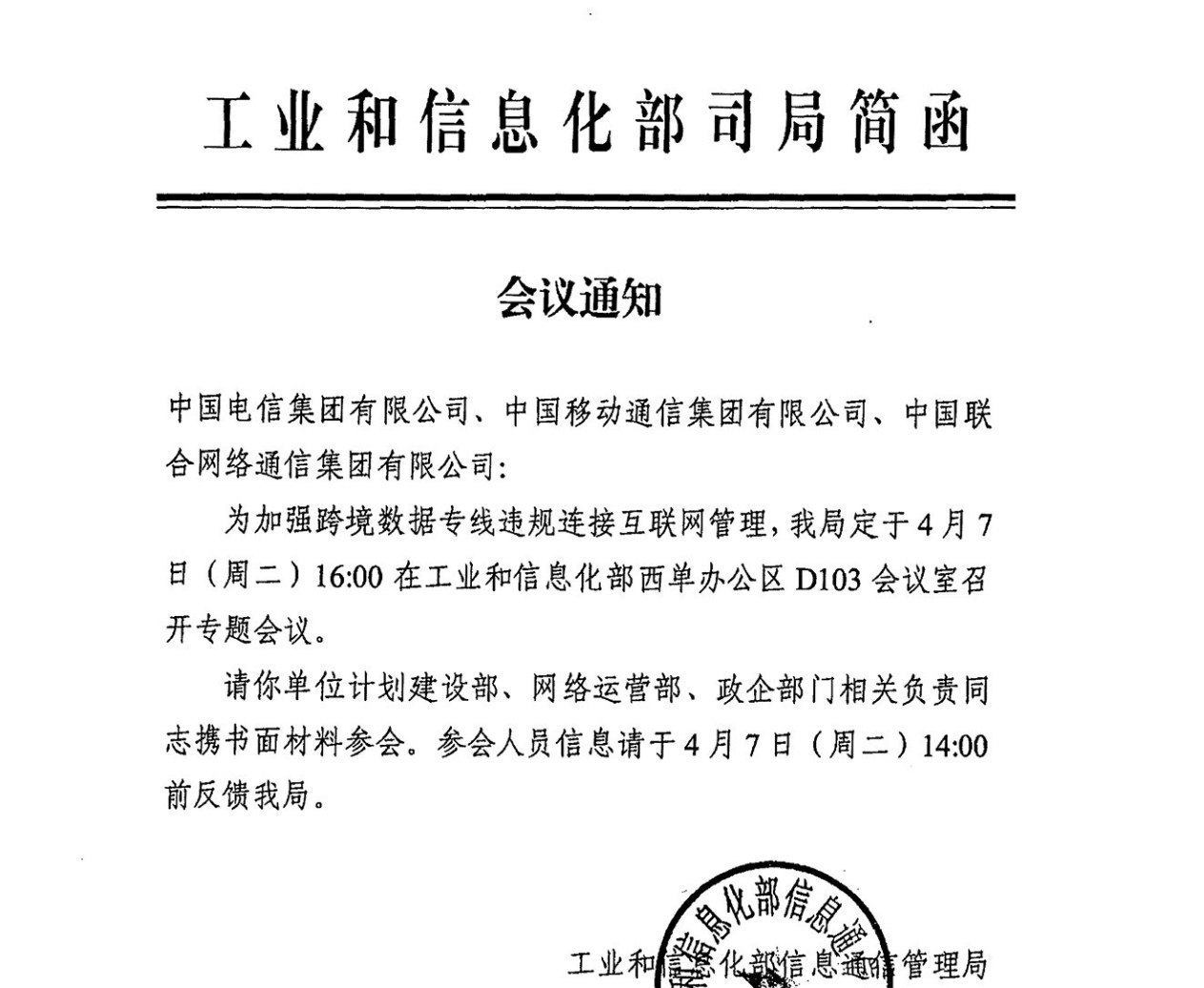
An industry message circulating at the time claimed that China Telecom Group had instructed Guangdong Telecom to remediate cross-border dedicated-line access, with Guangzhou acting first and other cities potentially following. It predicted disruptions to some IEPL-labelled services using Guangdong Telecom ingress.
The source language was:
According to industry reports, a group-level document required remediation of cross-border dedicated-line services in Guangdong, focusing on access allegedly used for unauthorized cross-border networking. Guangzhou reportedly began first, with other cities expected to follow, which could interrupt some IEPL services using Guangdong Telecom ingress.
Accounts differed, and the article did not independently authenticate every part of the circulating claim. The actionable lesson did not require accepting the rumor as confirmed:
- do not treat a single-ingress route as absolutely stable;
- keep a geographically and operationally independent fallback for important work;
- avoid concentrating money in long-term plans.
What users could do
1. Prioritize availability before speed
First ensure that a connection works, stays connected, and can switch nodes. Pursue 4K throughput or very low latency only after that baseline.
2. Keep two independent providers
- Use at least two providers with meaningfully different ingress and upstream strategies.
- Check same-day status channels before purchase rather than relying only on an old review.
- Prefer monthly payment and keep prepaid exposure low.
Starting points:
Two brands are not independent if they share the same operator or upstream resource. Verify the relationship where possible.
3. Keep a direct-route fallback
A direct route may be slower than a good relay, especially at the evening peak, but can be valuable during a widespread ingress outage.
4. Consider self-hosting only with the required skills
A self-managed server or small trusted group can offer more control, but the user assumes maintenance, node replacement, security, and incident response. It is not automatically more private or reliable.
New users can review:
New-user checklist
- A “premium dedicated line” can still lose its ingress or upstream resource.
- “No throttling” does not mean full speed at every hour.
- Annual, multi-year, and large one-time balances carried more risk during this disruption.
- Treat “absolutely stable” or “never removed” language cautiously.
- Preserve current support and transaction evidence in case a dispute develops.
Conclusion
The April disruption appeared systemic: scarce resources and compliance pressure affected a supply chain, not only one retail provider. The market's near-term competition was shifting from maximum speed at minimum price toward operational continuity.
For an ordinary user, the more resilient choice was one primary service, one independently operated backup, monthly payment, and no large prepaid balance.
Related reading
- 2026 proxy-service reviews
- Proxy-service directory
- How to Choose a Provider and Reduce Exit Risk
- Clash Verge setup for Windows, Linux, and macOS
- Clash Meta setup for Android
- Shadowrocket setup for iOS
Source note
This article was assembled from public notices, community reports, and industry discussions available on April 8, 2026. Some reports differed in timing and detail. It is not a promise about any provider or purchase; check the latest operator notice and make decisions within your own risk tolerance.