
Google's SEO Starter Guide: An Independent Practical Summary
Google publishes an extensive Search Engine Optimization Starter Guide. This article is an independent summary of its practical lessons, updated against the English guide available on July 31, 2026.
Source and scope
Google's guide—not this article—is the authoritative source for Google's stated practices. Google explicitly says that no technique guarantees indexing or a first-place ranking. The guide describes ways to help search engines crawl, index, and understand pages; it does not promise traffic.
1. What SEO Is
SEO helps search engines understand content and helps people decide whether a search result is relevant. The baseline is Google's Search Essentials, which covers technical requirements, spam policies, and key best practices.
Most sites are discovered automatically by crawlers. Publishing a site is often enough for discovery, but being found, indexed, and ranked are separate outcomes.
Expect delayed and uneven results
Google says some changes may appear within hours while others take months. It generally recommends waiting a few weeks before judging whether work helped. Not every change will produce a visible difference, so measure and iterate.
2. Confirm Discovery Before Changing the Site
Try a site: query:
site:example.comThis is a quick check, not a complete index report. Use Google Search Console for page-level diagnostics and the URL Inspection tool for Google's view of a specific URL.
If the site is absent:
- check Google's technical requirements;
- confirm the site is publicly reachable;
- inspect
robots.txt,noindex, authentication, and canonical tags; - make sure pages have crawlable links; and
- submit a sitemap if it helps Google discover the URLs you care about.
A sitemap is useful but not mandatory and does not guarantee indexing.
3. Let Google Access the Page Users Receive
Google needs access to important CSS, JavaScript, images, and other resources to understand a rendered page. Blocking those resources can leave the crawler with a materially different page.
For location-dependent content, remember that Google's crawler may access from a different location than the target reader. Use Search Console's URL Inspection tool to see the fetched and rendered result.
If content should not appear in search, use Google's documented removal and indexing controls. robots.txt controls crawling but is not, by itself, a reliable way to keep an already known URL out of search results.
4. Organize the Site for People
Logical organization helps readers and can help search engines understand relationships among pages, especially on large sites. Do not redesign a working URL structure solely because a theoretical structure looks cleaner; migrations carry real redirect, linking, and measurement costs.
Use descriptive URLs
Prefer:
https://www.example.com/pets/cats/over an opaque identifier when the descriptive form is stable and useful:
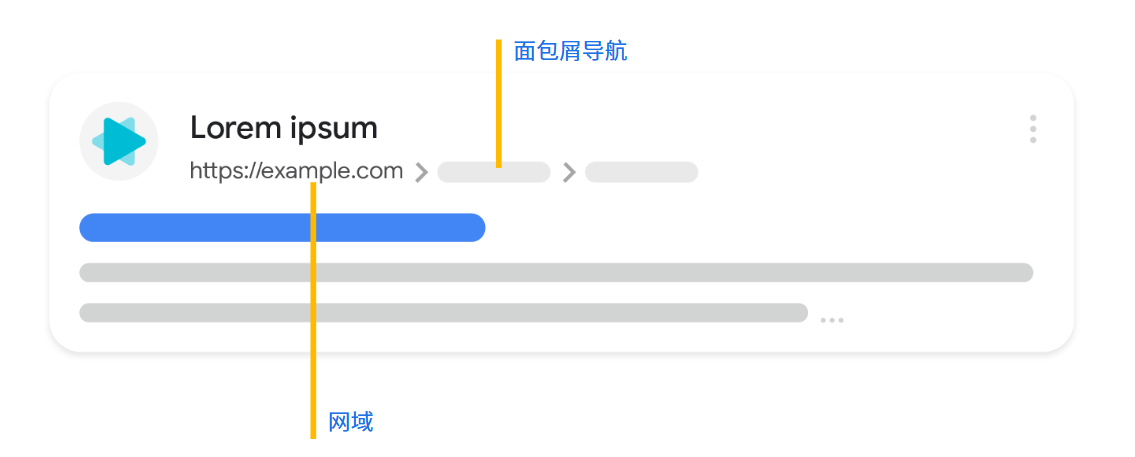
https://www.example.com/2/6772756D707920636174Search results may use URL words as breadcrumb signals. Breadcrumb structured data can provide additional context.
Group related pages
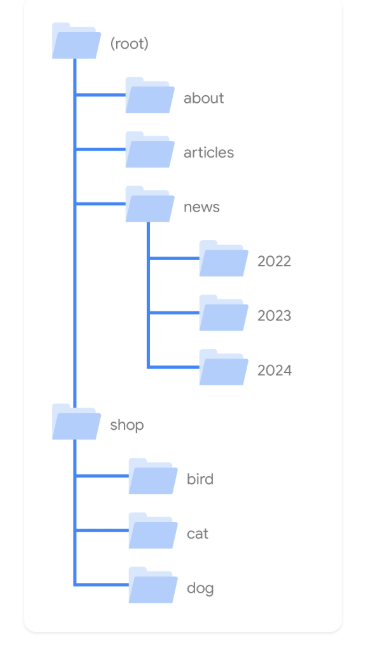
Directories can communicate site organization and help operations:
https://www.example.com/policies/return-policy/
https://www.example.com/promotions/summer-sale/
On very large sites, Google may learn that sections change at different rates. For a small site, editorial clarity and consistent internal links matter more than repeatedly moving files.
Consolidate duplicate URLs
Duplicate content is not automatically a spam violation or “penalty,” but multiple URLs for the same material can confuse readers and waste crawl resources.
Use, in order of clarity:
- one stable preferred URL;
- redirects from obsolete duplicates;
- consistent internal links to the preferred URL; and
rel="canonical"where redirects are not appropriate.
Google may select a different canonical than the one declared if other signals conflict.
5. Create Useful, Original, Maintained Content
Google's guide says compelling and useful content can influence search presence more than its other starter recommendations. In practice:
- write clearly and organize long pages with meaningful sections;
- create original material based on knowledge, testing, or reporting;
- update or remove content when it is no longer relevant;
- explain sources, experience, and limitations;
- answer the reader's actual task; and
- avoid pages created mainly to capture variations of a keyword.
The separate people-first content guidance offers self-assessment questions about originality, expertise, reliability, and whether a reader leaves satisfied.
Write for different levels of familiarity
Experts and beginners use different terms. Include natural explanations and relevant synonyms where they help readers. Google's language systems can connect a page with queries even when the exact phrase does not appear, so forced repetition is unnecessary.
Keep ads from blocking the task
Advertising is allowed, but intrusive interstitials and layouts that obstruct the main content harm usability. A reader should be able to identify and use the primary content immediately.
6. Link with Context
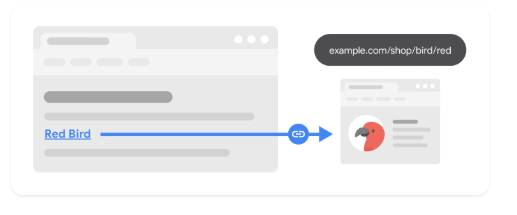
Links help readers and crawlers discover related resources and verify claims.
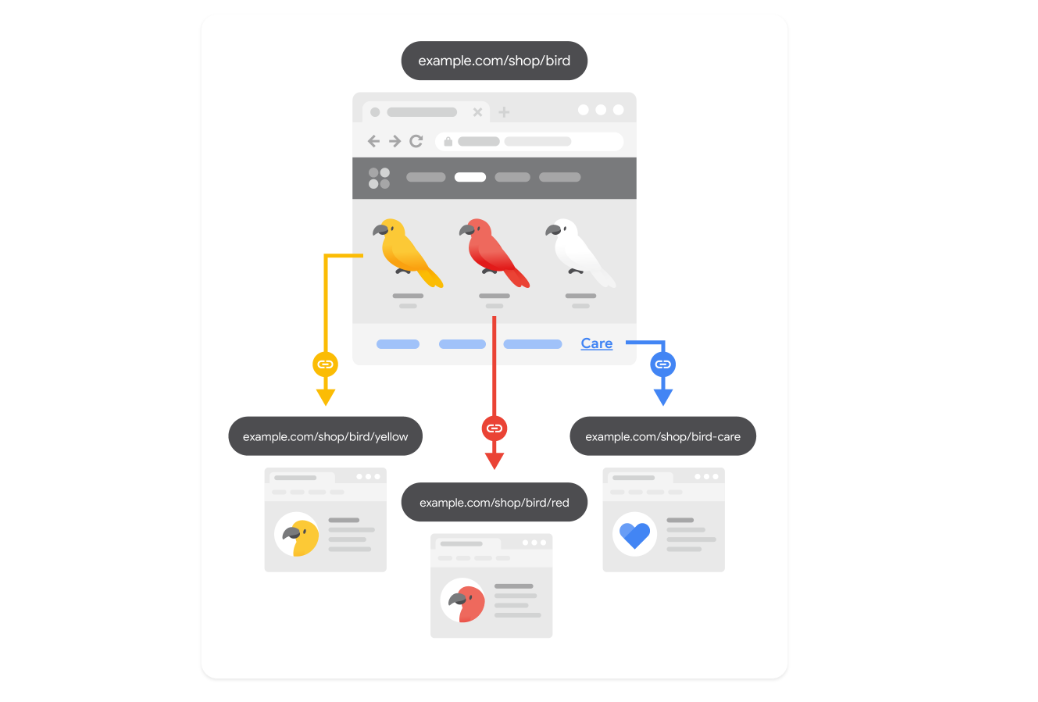
Good anchor text describes the destination:
[Google's canonical URL guidance](https://developers.google.com/search/docs/crawling-indexing/consolidate-duplicate-urls)is more informative than:
[click here](https://developers.google.com/search/docs/crawling-indexing/consolidate-duplicate-urls)Link to external sources you trust. For paid links, use rel="sponsored"; for untrusted user-generated links, use rel="ugc" or nofollow as appropriate. These annotations are not substitutes for moderating spam.
7. Improve Search Appearance
Titles
Google can construct a title link from the HTML <title>, visible headings, and other page signals. Write a title that is:
- unique to the page;
- concise but descriptive;
- consistent with the visible main heading; and
- free of repeated boilerplate and keyword stuffing.
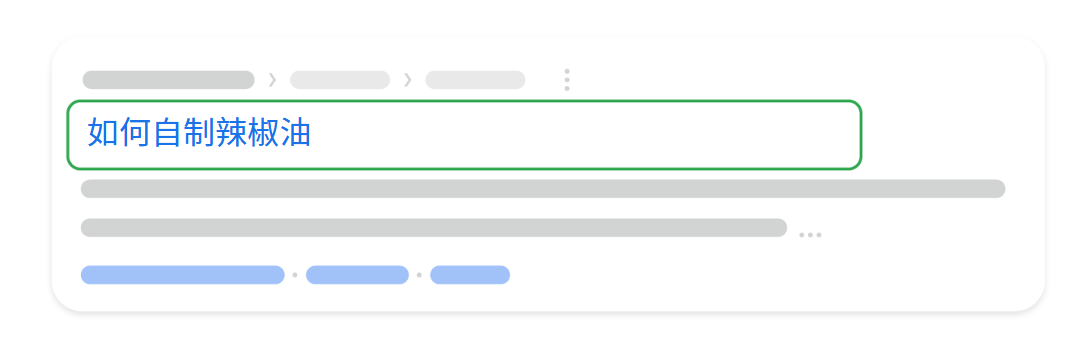
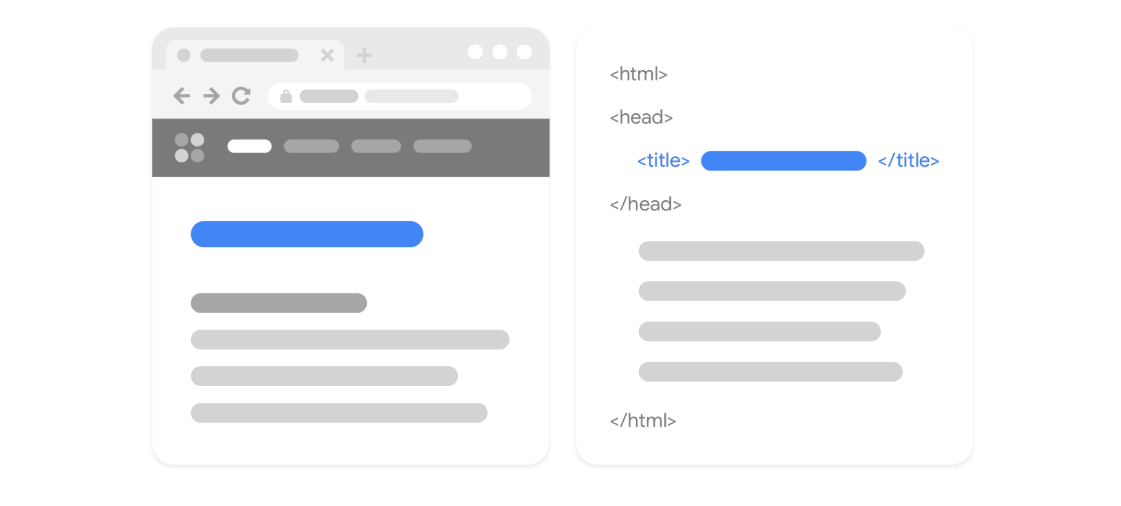
Google may still rewrite the displayed title for a query. The goal is an accurate page label, not forcing a specific rendering.
Snippets and meta descriptions
Search snippets usually come from page content and sometimes from the meta description. A useful meta description is a concise, page-specific summary, but Google may select different text when it better matches the query.
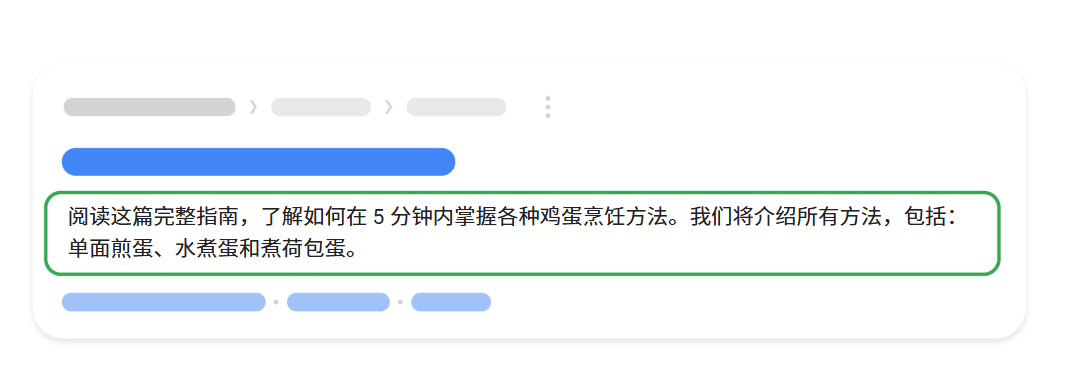
Do not use the same generic description across many pages.
8. Optimize Images and Video
For images:
- use a clear image that supports the surrounding section;
- place it near relevant text;
- set width and height or reserve space to avoid layout shift;
- use efficient formats and sizes;
- provide short, descriptive alternative text when the image conveys information; and
- use an empty
alt=""for purely decorative images.
For video-focused pages, Google recommends a dedicated page with a descriptive title and supporting text. Video structured data, thumbnails, and accessible captions may help users and eligible search features, but markup must match visible content.
9. Promote Without Manufacturing Signals
Promotion can help interested people and crawlers discover new content:
- share it with an existing audience;
- participate genuinely in relevant communities;
- use newsletters with permission;
- maintain accurate business and author profiles; and
- earn references through useful research, tools, or explanations.
Aggressive self-promotion, automated link placement, paid links without qualification, and campaigns designed to manipulate rankings can violate Google's spam policies.
10. SEO Myths Google Says Not to Prioritize
Google's current starter guide explicitly downplays:
- Meta keywords: Google Search does not use the keywords meta tag.
- Keyword stuffing: repetition harms readability and violates spam policies.
- Exact-match domains and URL keywords: the words alone have little ranking effect.
- A magic word count: there is no universal minimum or maximum for ranking.
- Subdomain versus subdirectory dogma: choose what works operationally.
- PageRank as the whole system: links are only part of Google's ranking systems.
- A duplicate-content “penalty”: duplicates are inefficient, but not normally a manual action by themselves.
- A magic number or exact order of headings for ranking: semantic heading order still matters for accessibility and maintainability.
- Calling E-E-A-T a single ranking factor: Google's helpful-content documentation says it is not one.
11. A Practical Implementation Checklist
Discovery and indexing
Content
Search appearance
Measurement
Next Steps
- Google SEO Starter Guide
- Google Search Essentials
- Search Console getting started
- Structured data introduction
- International and multilingual sites
- Google Search Central blog
Conclusion
This page is a good checklist, not proof that applying every item will significantly improve rankings. SEO outcomes depend on discovery, competition, relevance, quality, site history, user demand, and many other systems outside a publisher's control. The defensible goal is to make the site technically accessible, genuinely useful, easy to understand, and measurable over time.