
OKX and Crypto for Beginners: Deposits, Networks, Transfers, and P2P Risk
This guide explains the mechanics of receiving and sending cryptocurrency through OKX, using USDT as a common example. It also corrects several dangerous beginner assumptions: a stablecoin is not the same as cash in a bank, a blockchain transfer is usually irreversible, and P2P conversion is not automatically available or lawful in every country.
This is an educational walkthrough, not investment, legal, or tax advice. Crypto products are restricted in some jurisdictions, and OKX makes different services available to different customers. Confirm eligibility on the official OKX website, review the terms shown to your account, and follow the laws where you live.
Financial risk
Only use funds you can afford to lose. Do not borrow to buy crypto, do not use leverage as a beginner, and never send assets to someone promising guaranteed returns, account protection, a job commission, or an investment recovery.
What you will learn
- the difference between an exchange account and a self-custody wallet;
- how to create and secure an eligible OKX account;
- how to receive crypto without choosing the wrong network;
- how to send a small test transaction;
- how P2P conversion works and where scams occur; and
- the basic risks of stablecoins, exchanges, and self-custody.
Before opening an account
Check whether the service is available to you
Do not use a false address, borrowed identity, or location workaround to bypass a restriction. Product availability can depend on residence, citizenship, verification status, and local regulation. A product shown in an online tutorial may be absent from your account.
Start at okx.com rather than a link from a message or search advertisement. Confirm the domain and certificate, then use OKX's official-channel verification tool if anything looks unusual.
This article contains an OKX referral link. If you register through it, this site may receive a commission without changing the price shown to you. Using it is optional; read the site's affiliate disclosure and verify that the destination is an official OKX page before entering credentials.
Understand custody
An exchange account and a blockchain wallet solve different problems:
| Model | Who controls the signing key? | Main convenience | Main risk |
|---|---|---|---|
| Centralized exchange account | The exchange custodies pooled assets and manages withdrawals | Easier trading, account recovery, and some fiat services | Insolvency, freezes, account compromise, withdrawal restrictions |
| Self-custody wallet | You hold the seed phrase or signing key | Direct control and access to on-chain applications | Irrecoverable key loss, malicious signatures, smart-contract and device risk |
Neither model is automatically "safe." Use the one whose failure modes you understand, and avoid keeping more value on a trading platform than your actual workflow requires.
1. Create and secure an OKX account
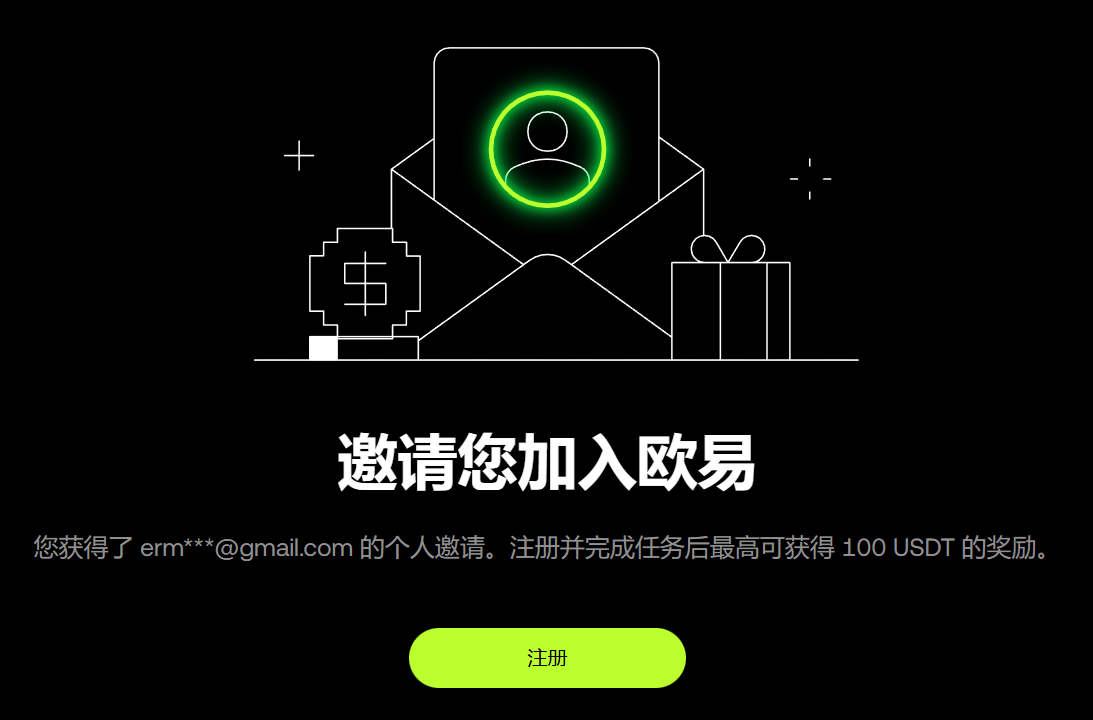
If OKX accepts customers in your location:
- open the official OKX site;
- register with an email address or phone number you control;
- create a unique password using a password manager;
- complete the identity checks required for the services you need;
- enable an authenticator, passkey, or hardware security key where supported;
- save recovery information offline; and
- enable the anti-phishing code for official emails.
Never let a "support agent" screen-share into your account, read a verification code, or ask you to move assets to a "safe wallet." Freeze the account through the official app or website if you suspect compromise.
2. Receive crypto into OKX
Receiving crypto is a transfer from another exchange or wallet to a deposit address assigned by OKX.
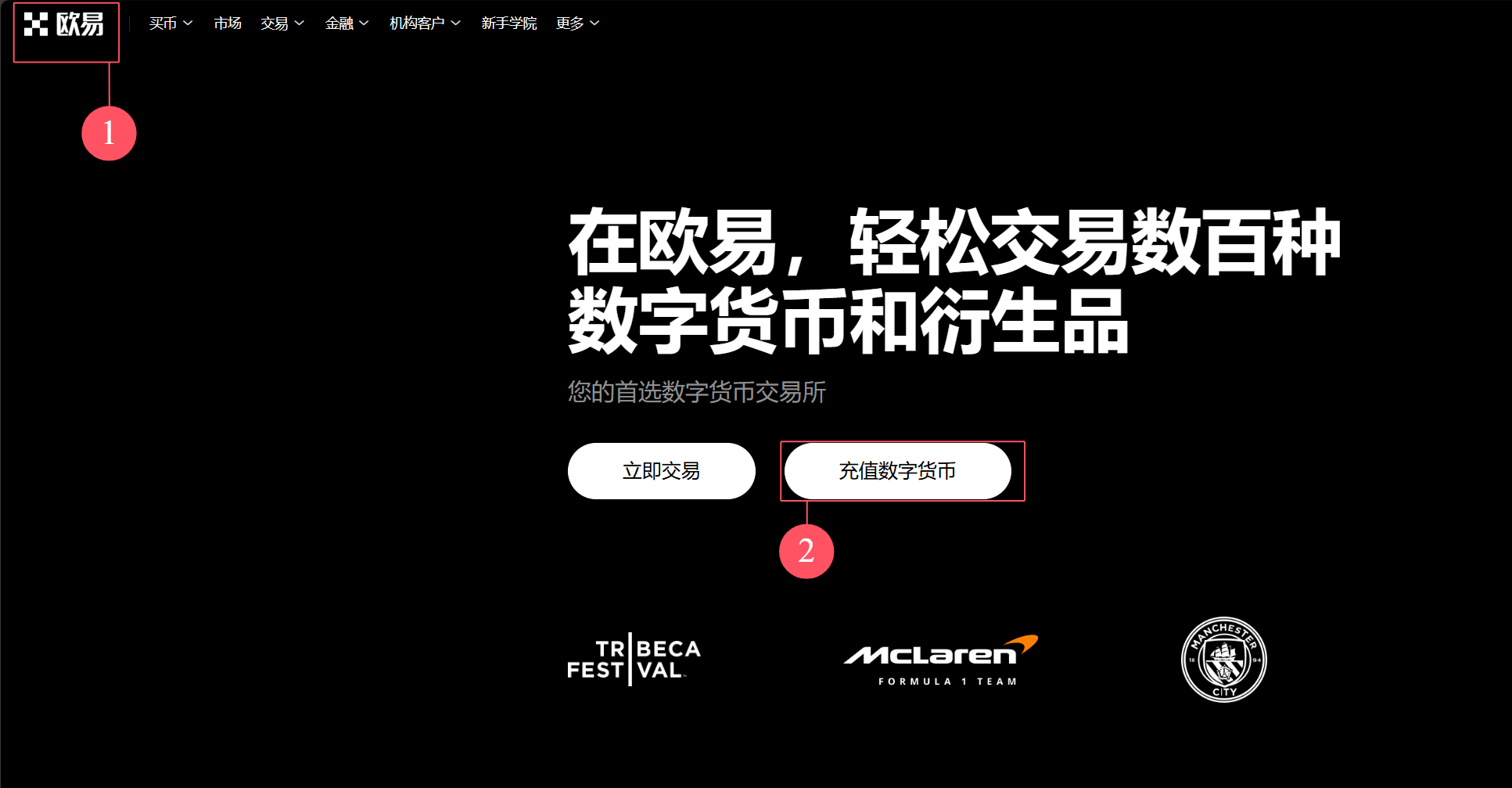
Select the asset and network
In OKX, open Assets and select Deposit, then choose the asset. The interface will show only the networks currently supported for that asset and account.
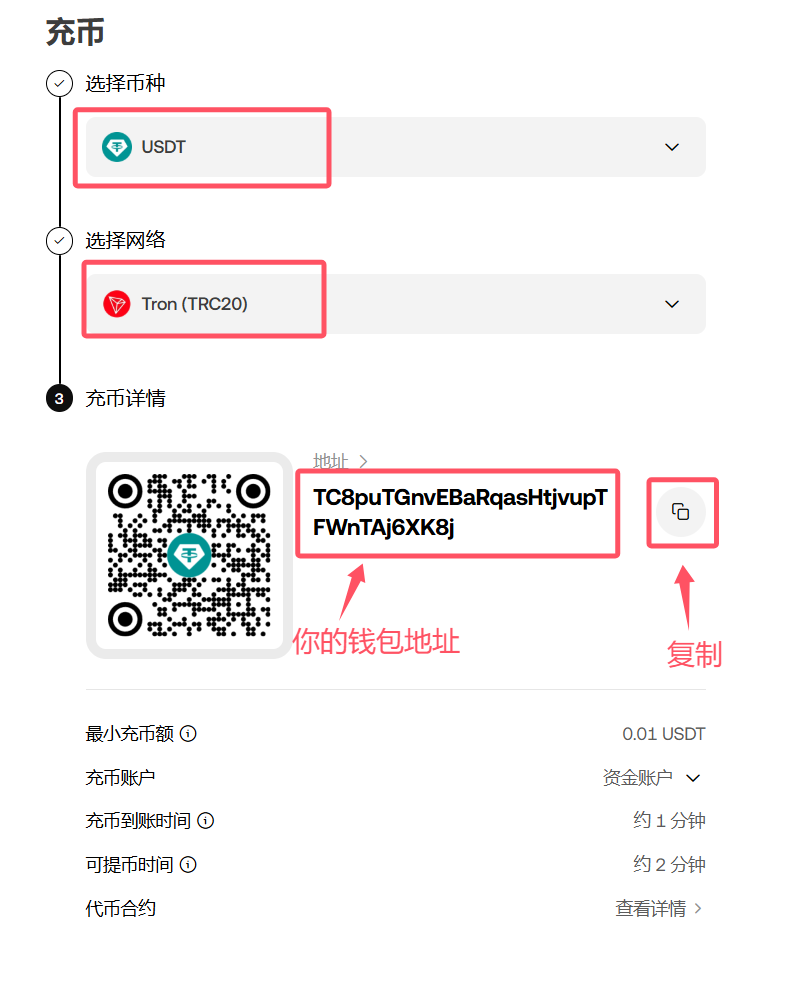
The sending platform and OKX must use the same asset, network, and address format. For example, "USDT" exists on several unrelated networks. An address displayed for one network does not mean another network can deliver to it.
Do not choose TRC-20, ERC-20, a BNB Chain token, or any other network based solely on a blog's claim that it is cheapest. Check all of these in the live interfaces:
- the network is supported by both sender and receiver;
- deposits and withdrawals are currently enabled;
- the contract or token identity is correct;
- any memo, tag, or destination identifier is included;
- the amount is above the displayed minimum; and
- you have the network's native asset if a self-custody wallet needs gas.
Copy the deposit details carefully
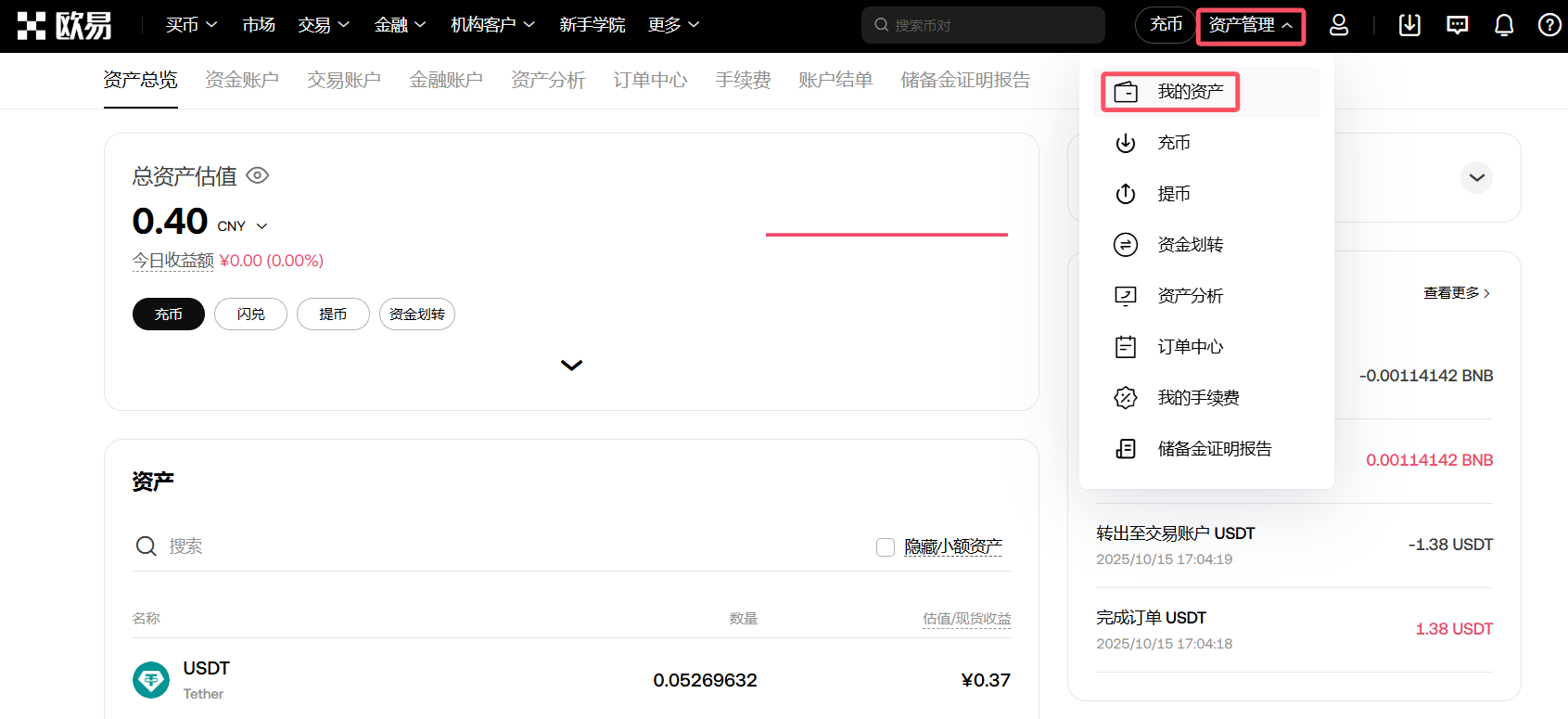
- copy the address from the OKX deposit page;
- compare the beginning and end after pasting it into the sender;
- copy the memo or tag if OKX displays one;
- send a small test amount above the stated minimum;
- wait for it to be credited; and
- only then consider sending the remainder.
Malware can replace a copied address. A QR code reduces typing errors but does not prove who controls the destination.
Deposits are not instant. The blockchain must confirm the transfer, and OKX may require additional confirmations or review. The official deposit guide says the selected asset and network must match and warns that unsupported or below-minimum deposits can be lost.
3. Send or withdraw crypto
Open Assets, select Withdraw, choose the asset and network, and enter the destination details shown by the receiving wallet or exchange.
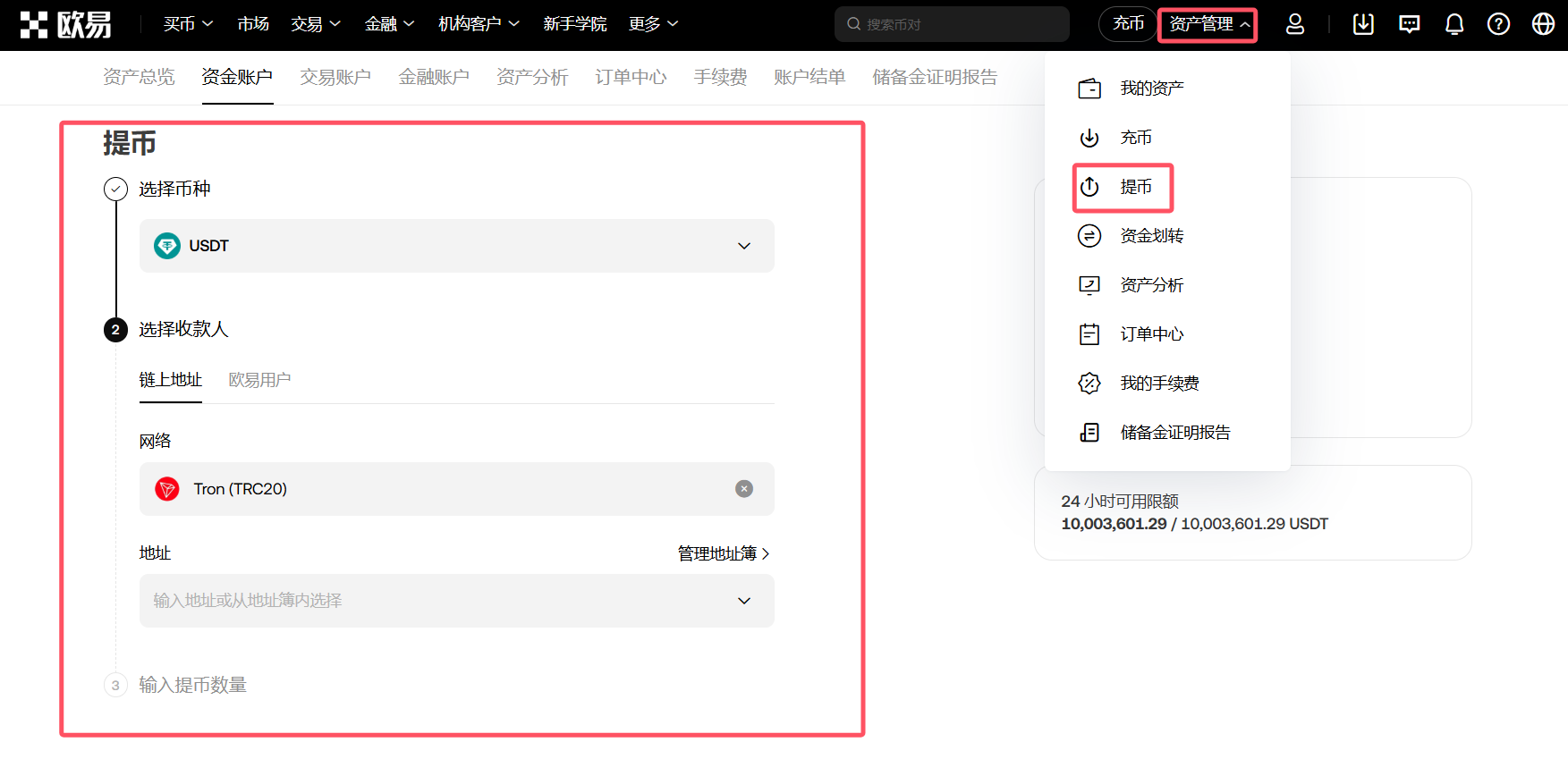
Before confirming:
- verify the destination through a second trusted channel;
- match the network exactly;
- include any required memo or tag;
- inspect the fee and the amount the recipient will receive;
- check whether a travel-rule or wallet-ownership prompt applies; and
- make a small test transfer when practical.
Blockchain transfers are generally not reversible. Support may be unable to recover an asset sent to the wrong address, contract, network, or memo. Anyone who unexpectedly asks you to pay a tax, unlock fee, verification deposit, or recovery charge in crypto is likely attempting fraud.
For regularly used destinations, enable an address allowlist and withdrawal lock if your account offers them. This can reduce account-takeover damage, though it cannot fix an address you approved incorrectly.
4. Convert crypto through P2P
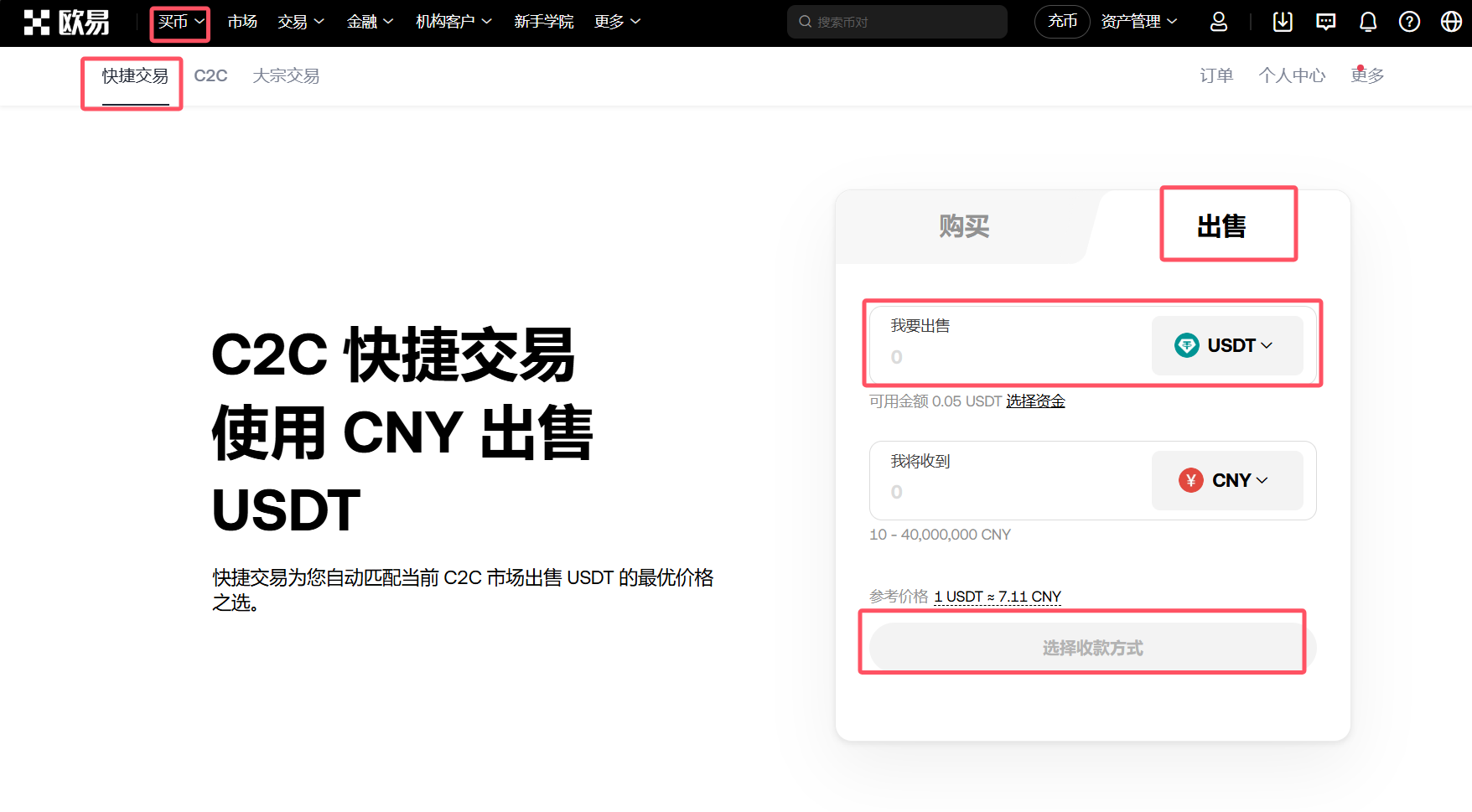
P2P trading matches two users: one transfers fiat through a listed payment method, while the platform temporarily escrows the seller's crypto. The exchange does not hold or reverse every off-platform fiat payment.
P2P availability, supported currencies, payment methods, identity requirements, and legality depend on your account and location. Do not use P2P if the service is restricted where you live or your payment provider prohibits the transaction.
Safer P2P rules
- trade only inside the official order and chat interface;
- use payment accounts in your own verified name;
- reject third-party or mismatched-name payments;
- never rely on a screenshot or SMS as proof of receipt;
- inspect the actual settled balance in your payment account;
- do not release crypto while a transfer is pending, reversible, short, or disputed;
- do not move to Telegram, WhatsApp, or another off-platform chat;
- keep the order, chat, and payment evidence; and
- use the in-platform appeal process before cancelling a disputed order.
OKX's current P2P scam guidance specifically warns about fake receipts, impersonation, social engineering, chargebacks, and third-party payments.
There is no universal "safe daily amount" or "tax-free annual amount." Transaction reporting, tax, bank monitoring, and source-of-funds requirements depend on jurisdiction and circumstances. Structuring transfers to avoid compliance checks can itself create legal risk. Keep truthful records and consult a qualified local professional when necessary.
Essential concepts
Cryptocurrency
A cryptocurrency is a digital asset recorded and transferred under the rules of a blockchain or related ledger. Ownership usually depends on control of signing keys, while exchange balances are contractual claims against a custodian.
Crypto prices can move sharply, markets can become illiquid, and a platform or token can fail. Technical transferability does not guarantee investment value.
Stablecoin and USDT
USDT is a stablecoin issued by Tether that seeks to track the US dollar. It is not a bank deposit, does not have the same protections as insured cash, and can trade above or below its target.
Its risks include:
- issuer and reserve risk;
- redemption eligibility and minimums;
- exchange and custodian risk;
- network and smart-contract risk;
- address freezing or sanctions controls;
- temporary loss of the price peg; and
- changes in regulation or market access.
Use the issuer's current transparency reports and terms rather than assuming "1 USDT always equals 1 USD."
Token network and TRC-20
TRC-20 is a token standard on the TRON network. USDT issued there is separate from USDT representations on Ethereum, Solana, and other networks. Lower quoted fees do not make a network appropriate if the recipient does not support it.
Gas
Gas is the network fee paid to validators or other network participants for processing an on-chain action. In a self-custody wallet, the fee is often paid in the network's native asset rather than the token being transferred.
Private key and seed phrase
A private key authorizes transactions. A seed phrase can regenerate one or more wallet keys. Anyone who obtains it can usually move the assets without another password or support review.
- never enter a seed phrase into a website linked from a message;
- do not store it as a cloud screenshot or ordinary note;
- make an offline backup that can survive device loss;
- test the recovery procedure with a low-value wallet; and
- never share it with "support."
Hardware or cold wallet
A hardware wallet isolates signing keys from the general-purpose computer. "Cold" storage usually means keys are kept offline except for carefully controlled signing. It reduces some attack paths but does not protect you from approving a malicious transaction, losing the recovery phrase, or buying a tampered device.
Purchase from the manufacturer or an authorized channel and initialize the device yourself.
Web3
Web3 is a broad label for applications that use wallets, tokens, smart contracts, and decentralized networks. It does not guarantee decentralization, ownership, privacy, security, or investment return. Inspect what a wallet signature authorizes before approving it.
CEX and DEX compared
| Topic | Centralized exchange (CEX) | Decentralized exchange (DEX) |
|---|---|---|
| Custody | Platform controls exchange wallets | User signs from a self-custody wallet |
| Account recovery | May exist after identity checks | Usually no recovery for a lost seed phrase |
| Fiat access | May offer eligible card, bank, or P2P methods | Usually requires a separate on-ramp or existing crypto |
| Pricing cost | Trading and withdrawal fees | Pool fee, price impact, slippage, and network gas |
| Main risks | Custodian failure, freezes, compromise, market manipulation | Malicious tokens, approvals, smart contracts, bridges, MEV, key loss |
| Beginner burden | Account and platform rules | Wallet, network, contract, and transaction interpretation |
Examples often described as CEXs include OKX, Coinbase, and Binance; examples of DEX protocols include Uniswap, Curve, Raydium, and PancakeSwap. Their products and availability change, and naming a platform is not an endorsement.
Common beginner questions
What if I selected the wrong network?
Stop and record the transaction hash, asset, source network, destination address, and platform. Contact the receiving platform through its official support channel. Recovery may be impossible or may require a fee. Do not pay a stranger who claims to be a blockchain recovery agent.
Is a wallet safer than an exchange?
They have different risks. Self-custody removes some custodian risk but makes you responsible for keys, device security, transaction review, and recovery. An exchange is easier to use but can freeze withdrawals, suffer a breach, or fail. Diversification of custody can reduce a single point of failure, but only if you can securely operate each method.
Should a beginner trade futures or use leverage?
No. Leverage can liquidate a position rapidly and create losses that a new user does not understand. Learn spot-market mechanics, fees, custody, and record-keeping first. Avoid copy-trading promises and "guaranteed" signal groups.
Why is my withdrawal under review?
Possible reasons include identity verification, security changes, address checks, travel-rule requirements, risk controls, network maintenance, or an account restriction. Use the status message and official support; never pay an outside party to bypass the review.
Is USDT the same as dollars in a bank account?
No. Its issuer aims to maintain a dollar reference price, but the token is a different asset with different custody, redemption, counterparty, network, and legal protections.
A cautious learning sequence
- Account security: set up a password manager, strong authentication, recovery, and anti-phishing controls.
- Read-only exploration: learn where the live network, minimum, fee, and risk disclosures appear.
- Small deposit: transfer an amount you can lose, using a matching network and test transaction.
- Small withdrawal: practice verifying an address and transaction hash.
- Record keeping: retain date, fiat value, fees, counterparties, and transaction IDs for tax and audit needs.
- Self-custody practice: use a separate low-value wallet and test backup recovery.
You do not need derivatives, yield products, bridges, or unfamiliar tokens to learn the basic workflow.
Final checklist
Before every transfer, confirm:
- the service is permitted and available for your location;
- the destination is controlled by the intended recipient;
- asset, network, address, and memo all match;
- the fee and minimum are acceptable;
- the amount is small enough for a first test;
- no stranger is pressuring you;
- you can explain the transaction without relying on a promised return; and
- you have saved the records needed for support, accounting, and tax.
Crypto transactions combine financial, technical, custody, and fraud risk. Move slowly, verify independently, and assume mistakes may be irreversible.